|
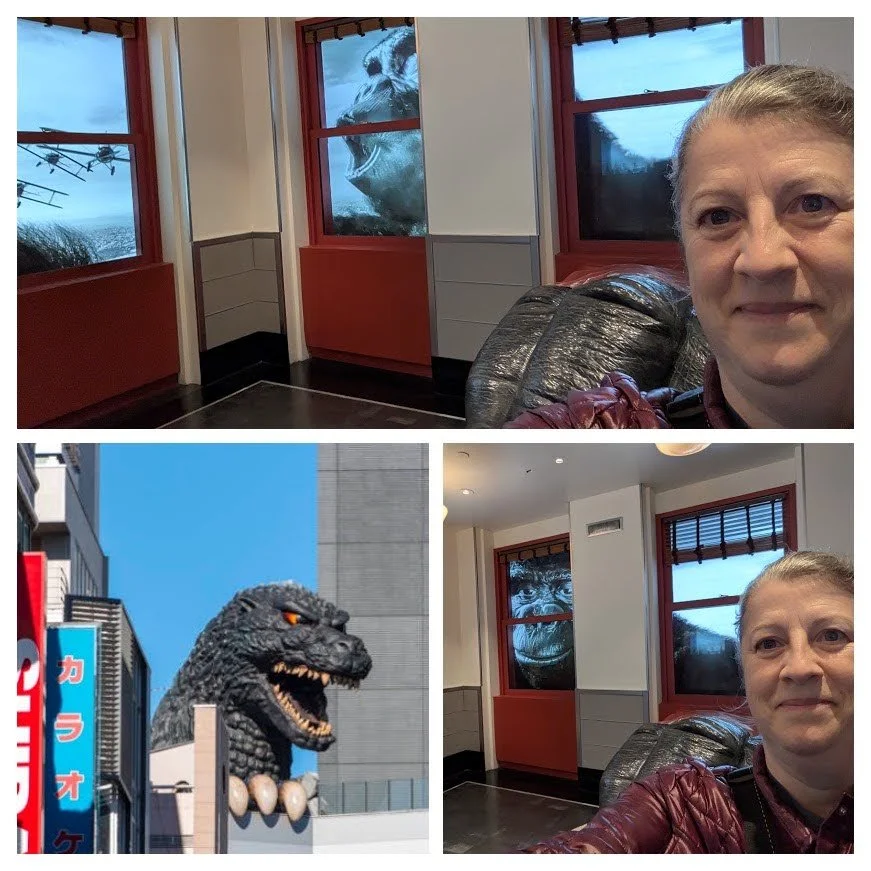
This week's posts took us from the streets of New York to the neighborhoods of Tokyo, exploring how travel shapes our perspective, how demographic change is reshaping Japan's workplaces, and how iconic landmarks become part of our everyday lives. While the topics ranged from giant movie monsters to convenience store recruitment campaigns and observation towers, they all shared a common theme: the way our surroundings influence what we notice, value, and sometimes take for granted. On Monday, I reflected on a surprisingly meaningful connection between two iconic cities and two iconic beasts: King Kong in New York and Godzilla in Tokyo. During my first visit to New York, I took the obligatory tourist photo with King Kong looming behind the Empire State Building, and it immediately brought back memories of seeing Godzilla's head atop the Hotel Gracery in Shinjuku when I lived in Tokyo. The comparison prompted me to think about how travel changes our awareness. When we are in a new place, curiosity comes naturally. We look up more, notice details more carefully, and become fully present in our surroundings. The challenge, of course, is maintaining that same sense of wonder when we return home. Sometimes all it takes is a familiar landmark, a memory, or even a silly photo to remind us to slow down, pay attention, and see our everyday environment with fresh eyes. On Wednesday, I explored FamilyMart's new recruitment campaign featuring Lady Gaga, who appears working in a Japanese convenience store while encouraging viewers to consider joining the company. Beyond the attention-grabbing celebrity endorsement, the campaign reflects a much larger story unfolding across Japan. Labor shortages driven by an aging population and declining birth rate are forcing employers to rethink long-standing assumptions about recruitment, workplace culture, and employee expectations. What I found particularly interesting was that FamilyMart is pairing its marketing efforts with meaningful workplace changes, including more flexible appearance policies and greater accommodation for a diverse workforce. For those of us who have spent years working with Japanese organizations, this represents a significant shift away from traditional expectations of uniformity and toward a greater emphasis on individuality, flexibility, and belonging. The campaign serves as a reminder that in today's labor market, employers increasingly need to adapt to workers rather than expecting workers to adapt to them. For Fun Friday, I compared two of my favorite urban landmarks: New York's Empire State Building and Tokyo Skytree. Although they represent different eras, different architectural styles, and different cultural contexts, both serve as symbols of their respective cities' ambition and identity. Visiting the Empire State Building brought back memories of living near Tokyo Skytree, which became a familiar point of reference in my daily life. What fascinated me was the realization that landmarks viewed as world-famous attractions by visitors often become ordinary neighbors to local residents. Yet those structures still shape how people experience and navigate their cities. Sometimes traveling abroad and seeing another city's icon can deepen our appreciation for the landmarks that once felt like a routine part of everyday life. Looking back on the week, a common thread emerges. Whether we're exploring a new city, adapting to a changing workplace, or rediscovering a familiar landmark, our perspective matters. Curiosity encourages us to notice what others might overlook. Openness allows us to adapt to changing circumstances. And occasionally, stepping outside our routine helps us appreciate what has been there all along. Some of life's most valuable insights come not from extraordinary events, but from seeing familiar places, people, and ideas through a fresh lens. Thank you, as always, for reading. Warmly, Saskia
|