

A day in Kita‑Kamakura: roots, reconnections, and quiet alignment
Yesterday was one of those beautifully layered days that only Japan seems able to create. I started the morning hiking with Tom Kobayashi, then met Kouji Miki at Engakuji for a long, thoughtful conversation about Zen, and ended the day with ohaka‑mairi at my husband’s family grave. Each person held a different piece of my Japan story, and somehow the entire day unfolded with a sense of gentle alignment.
Returning to Kita‑Kamakura, where my husband and I lived in my mother‑in‑law’s house before moving to San Francisco, felt bittersweet. Seeing the house again brought back early‑marriage memories, the quiet routines we built, and the feeling of being held by a place that shaped the beginning of our family life. It felt like revisiting an old chapter with gratitude rather than longing.
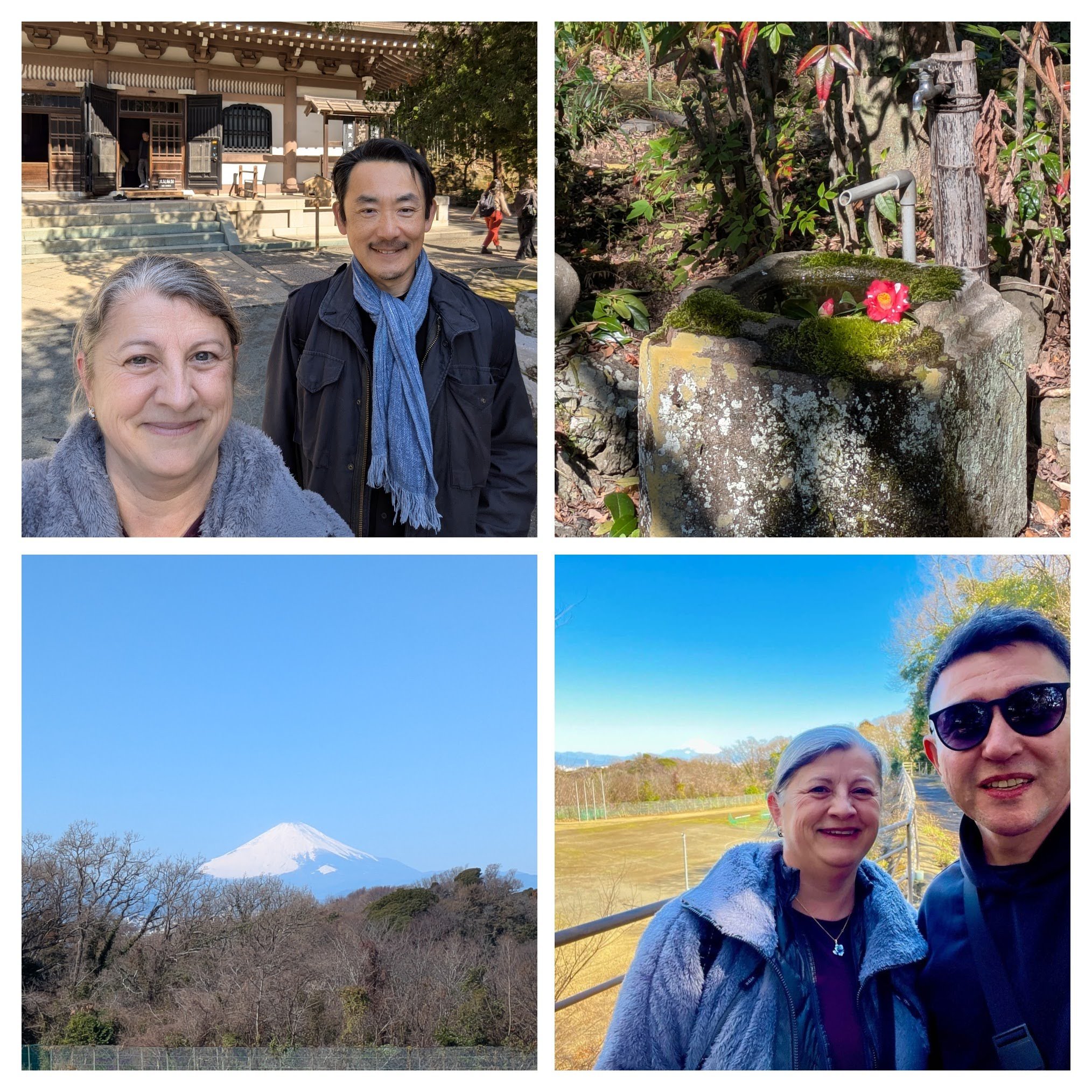
My hike with Tom Kobayashi was both grounding and energizing. Even though we first connected on LinkedIn, he is one of those people who feels instantly familiar. We walked the quiet paths of Kita‑Kamakura talking about people, communication, and how culture shapes the way we work.
The route took us through Genjiyama Kōen, which carries its own personal meaning. It is where my husband took me on one of our first local dates, arriving with homemade riceballs that were simple and perfect.
The air was crisp, the paths peaceful, and we were even treated to clear views of Fuji‑san stretching across the distance. The blend of old memory and new conversation felt like past and present sitting hand in hand.
After lunch I headed to Engakuji to meet Kouji Miki, who is developing Zen 2.0 to make Zen practice more accessible to people beyond Japan.
What I expected to be a good conversation turned into something deeper and unexpectedly grounding. He shared how Engakuji became a source of solace during a difficult period in his life and spoke about the temple’s origins under its founding abbot Mugaku Sogen, a Zen scholar from China invited to Japan in the 13th century. His teachings shaped Engakuji into a place of calm, discipline, and renewal, something you can still feel in the air even centuries later.
Kouji also talked about the legacy of his ancestor Paul Miki, one of the 26 Christians executed in 1597 for their faith, and how carrying that history has guided him toward a spirituality rooted not in rigidity, but in openness and respect for other paths. Standing there listening to him, the temple’s history and his own story felt woven from the same thread.
At one point, he guided me into a short five minute meditation inside one of the temple spaces. I am not naturally good at sitting still, but with his quiet presence next to me, the time passed almost without me noticing. It was a simple moment, but profoundly centering, the kind of experience that only works when the person guiding you carries calm in their whole way of being.
Later in the afternoon, I visited the family grave for ohaka‑mairi. My husband’s family happened to be traveling in Japan at the same time, and when I reached out, our schedules aligned perfectly. We were able to visit the grave together, offer incense, and greet the ancestors as a family. I had brought a one‑cup sake for my husband’s favorite uncle, because I love the tradition of offering someone’s favorite food or drink. There is such tenderness in saying, “Here is something you loved,” and placing it with intention. Sharing that moment with my mother‑in‑law, sister‑in‑law, and the kids made the ritual feel complete.
By the time I left Engakuji, the day had settled into something full and peaceful. A return to where we once lived, a hike that wove new friendship with old memories, a Zen conversation that lingered long after, a grounding meditation, and a family ritual that closed the day with meaning. It was a wonderful end to a deeply insightful visit to a place that still feels like part of home.
