

Listening to Hooked and rethinking the myth of female friendship
Listening to Hooked by Asako Yuzuki, known in Japanese as Nile Perch, turned out to be far more unsettling than I expected, in the best possible way.
After reading Butter, I thought I knew the emotional terrain Yuzuki was interested in. I expected sharp observation and discomfort, and I got both, but Hooked went further. It doesn’t just examine women’s friendships, it takes apart the myth surrounding them. The idea that female friendships are automatically nurturing, safe, and emotionally intuitive is quietly but relentlessly questioned. What emerges instead is something far messier and far more human.
The story drops you into the world of women’s friendship circles, where expectations are rarely spoken out loud but are constantly felt. What stayed with me was how easily intentions are misunderstood. A gesture meant as closeness can be read as control. Silence can feel like rejection. Admiration can blur into fixation. Yuzuki captures how quickly these misreadings can stack up, especially when someone is deeply invested in being chosen, seen, or needed.
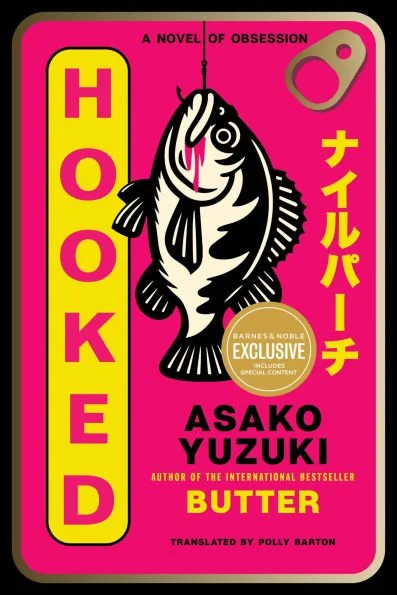
There were moments when I felt genuinely uncomfortable, not because the writing was sensational, but because it felt so close to real emotional experiences. The book explores how the desire for a female friend, someone who truly understands you, can become consuming. In that context, the story’s dramatic turns, including behavior that edges into unhealthy and even stalkerish territory, start to make sense. It isn’t exaggeration for shock value so much as an exploration of how far someone might go when loneliness, insecurity, and longing collide.
Listening to the audiobook intensified all of this. The narration by Ami Okumura Jones is outstanding. She captures subtle shifts in tone and emotion with remarkable precision, making the internal tensions feel almost claustrophobic at times. It felt less like being told a story and more like being drawn into someone’s inner world, where assumptions, fears, and hopes quietly spiral. Certain scenes lingered with me long after I stopped listening, resurfacing during moments of stillness.
Connecting the book with my experience living and working in Japan added another layer. The social context is clearly Japanese, but the emotional dynamics feel universal. At the same time, the emphasis on belonging, harmony, and unspoken rules gives the story particular weight. It made me more mindful of how easily we project meaning onto other people’s actions, and how costly it can be when those projections go unchecked.
What Hooked ultimately left me with was a heightened awareness of how fragile relationships can be when they are built on assumptions rather than clarity. Yuzuki doesn’t offer easy answers or moral judgments. Instead, she asks the reader to sit with discomfort and to question the stories we tell ourselves about friendship, intimacy, and what it means to be chosen.
By the end, I felt unsettled but grateful. It’s a book that asks for reflection and rewards it, even when that reflection is uncomfortable. Between Butter and Hooked, Asako Yuzuki has shown a remarkable ability to illuminate emotional blind spots many of us would rather ignore. I finished listening feeling both seen and challenged, and very curious about what she will choose to explore next.
