

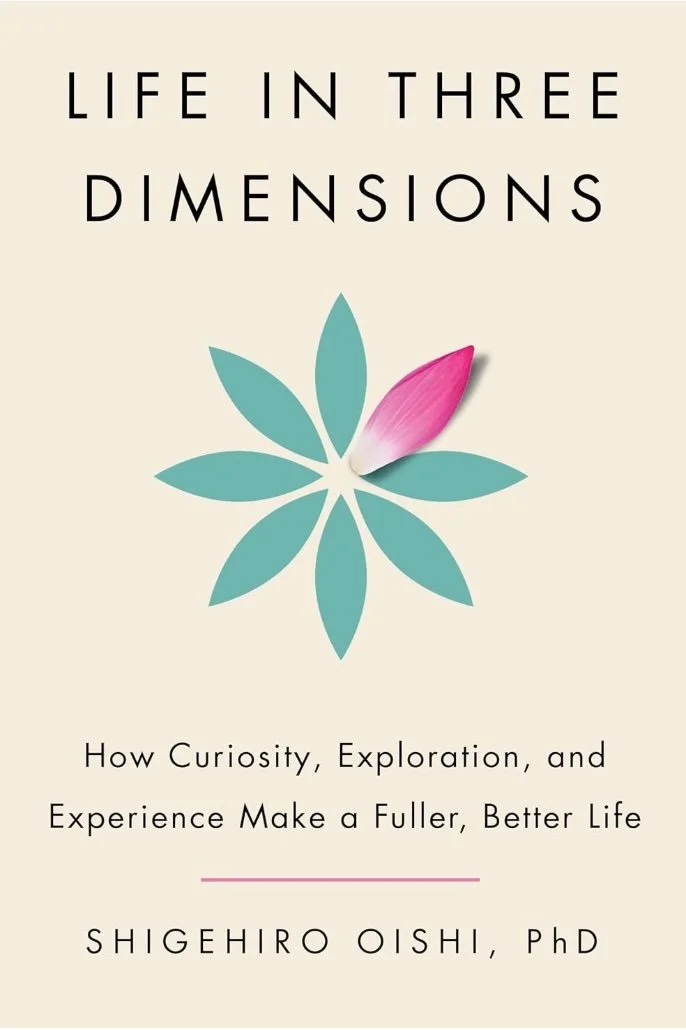
This series explores the three dimensions of a fulfilling life inspired by Shigehiro Oishi’s book Life in 3 Dimensions and my own experiences living in Japan, moving to the United States, and working between both cultures.
I listened to the middle section of the book during another early walk through Lafayette. The streets were still quiet, and the narrator’s voice carried Oishi’s ideas in a way that invited me to reflect more deeply. In this chapter, he describes psychological richness as a life marked by varied experiences, complexity, and shifts in perspective. It is not built on predictability or comfort. It grows through engagement with difference.
For me, psychological richness appears most vividly in my professional life. When I lived and worked in Tokyo, richness was woven into everyday interactions. Japanese business culture is layered and subtle. The spoken message is only part of the story. Silence can carry more meaning than words. Consensus unfolds internally and gradually.
I remember the first time a meeting ended with polite agreement, only for me to learn days later that the real discussion had just begun within the team. That experience stayed with me. It made me understand how much happens beneath the surface in Japanese organizations.
Now, working with Japanese companies in the United States, those lessons feel just as relevant. The landscape is American, but the cultural signals remain distinctly Japanese. Emails, presentations, and decision-making processes still reflect the values I learned in Tokyo.
I often find myself bridging these two worlds, helping both sides understand why the other operates the way it does. Sometimes I explain why U.S. teams push for rapid decisions. Other times I help Americans appreciate the careful internal alignment that Japanese organizations prioritize.
This bridging work is where psychological richness lives for me. It shows up in the moments when I interpret what is not being said, when I help two sides find common understanding, or when I recognize the reason behind a hesitation or a silence. These moments are not always easy, but they are layered with learning. They make my work feel alive.
Walking through Lafayette that morning, I realized how much I value this kind of complexity. It keeps me curious. It keeps me humble. And it continues to expand my perspective. Oishi’s framing helped me see that what I have long considered simply part of my job is actually a core part of what makes my life feel deeply fulfilling.
