


Bridging Jinji人事 and U.S. HR: Gratitude for 2025 and excitement for 2026
On these last days of the year, I find myself reflecting on the incredible journey of 2025: a year filled with opportunities to connect, collaborate, and contribute to the vibrant U.S.-Japan community. It was also the year I took a bold step: starting my own LLC at 50+ in my new homeland as a U.S. citizen. That milestone fills me with gratitude, not just for the chance to build something meaningful, but for the trust and support I’ve received along the way.
This year brought so many blessings. I had the privilege of working with and supporting organizations that are pillars of the U.S.-Japan relationship: the Japan Chamber of Commerce, Japan Society of Northern California, USJETAA, and the U.S.-Japan Council. Each event, each conversation reminded me how vital these connections are for fostering trust and collaboration across borders. From mentoring professionals to participating in programs that celebrate Japanese heritage, every experience reinforced why this work matters.
Click below to read more.
Bridging Jinji人事 and U.S. HR: What’s normal in Tokyo can be a lawsuit in San Francisco
Why Harassment Training for expat managers Is non-negotiable
Imagine this: you’ve just flown in a high-ranking manager from Tokyo to represent your company at a major U.S. conference. After a long day of meetings, he invites his Japanese PA for a late-night drink to celebrate. In Japan, this is standard practice. Declining might even feel awkward. But in the U.S.? That simple invitation could trigger a harassment claim.
This isn’t hypothetical. It happened to one of my clients. And it’s a wake-up call for every organization sending managers abroad.
Click below to read more.
Bridging Jinji人事 and U.S. HR: Hearing what’s left unsaid.
When people think of HR, they often picture policies, compliance, and paperwork. But the real strength, the skill that makes an HR professional truly effective in a Japanese working environment, is something quieter: listening. In a culture where harmony, or wa, is deeply valued, listening isn’t just a courtesy; it’s a foundation for trust and collaboration.
Japanese workplaces often rely on subtle communication. Employees may not voice concerns directly, especially if doing so could disrupt group harmony. A simple “daijōbu desu” - I’m fine- might hide stress or hesitation. Listening deeply means paying attention not only to words but to tone, pauses, and what remains unsaid. It’s about reading the air, kuuki wo yomu, a skill that is essential for HR in a Japanese environment.
Click below to read more.
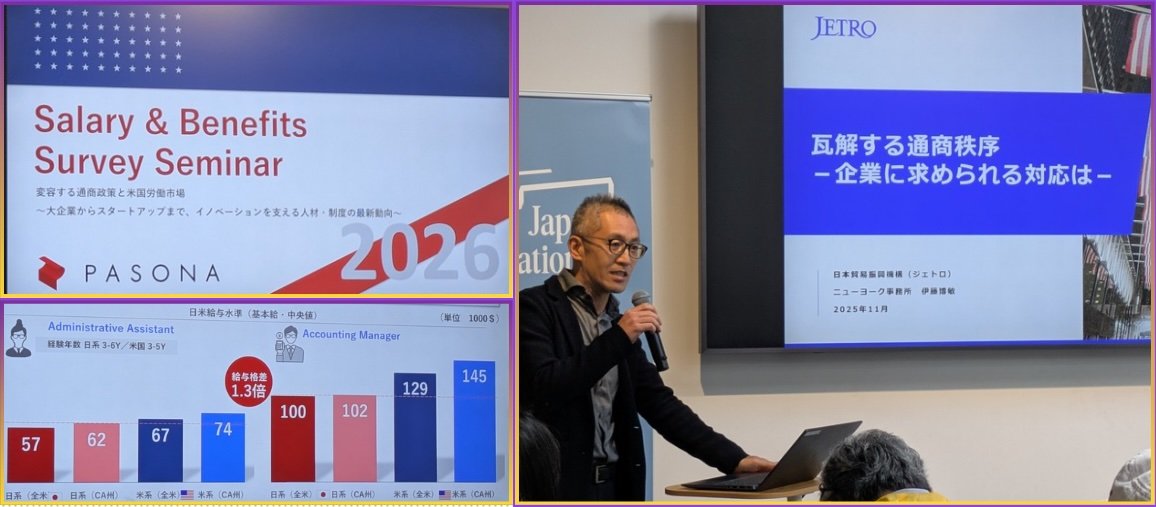
Bridging Jinji人事 and U.S. HR: Current HR trends and challenges
I recently attended a joint event by Pasona and JETRO at the Japan Innovation Center. The entire program was conducted in Japanese, which made the JETRO segment on current trade and tariff issues quite complex. It was a deep dive into economic trends and policy updates, important, but definitely heavy material.
Fortunately, the Pasona session was right in my wheelhouse. They shared fascinating insights and current data on Japanese companies operating in the U.S., highlighting HR challenges and workforce trends. One of the most interesting points was about evaluation systems: many companies have implemented performance reviews, but these often focus narrowly on short-term results like salary adjustments and promotions. Pasona emphasized that evaluation should not be an end in itself—it should serve as a tool for growth and strategic execution.
Click below to read more.
Bridging Jinji人事 and U.S. HR: Why hiring the right local HR staff is a game-changer for global teams
In today’s interconnected world, building a successful international business isn’t just about market entry strategies or product localization, it’s about people. And when it comes to people, your Human Resources team is your frontline. They’re the bridge between your company’s culture and the local talent you hope to attract and retain.
As someone who has worked across borders and cultures, I’ve seen firsthand how hiring the right local staff, especially in HR, can make or break your success. Most recently, I had the pleasure of joining a USJETAA event as a mentor for former JETs (Japan Exchange and Teaching Program alumni) looking to pivot into HR. It was inspiring to meet so many globally minded professionals who understand the nuances of working in Japanese environments.
Click below to read more.
Bridging Jinji人事 and U.S. HR: Transforming silence into strength
In one U.S.-based subsidiary of a Japanese company, a subtle yet impactful HR challenge was quietly eroding team collaboration and mutual understanding: Japanese expat employees were remaining silent during meetings, while their American colleagues, unaware of the cultural dynamics at play, interpreted this silence as a lack of interest or engagement.
However, beneath the surface, the situation was far more intricate, shaped not by apathy, but by deeply rooted cultural norms around communication, hierarchy, and decision-making.
Click below to read more.
Bridging Jinji人事 and U.S. HR: The Feedback Gap
A Japanese expat manager recently received a surprise during their annual performance review in the U.S.: a comment from their American team that they were “distant and hard to approach.” The manager was stunned. In Japan, maintaining formality and emotional restraint is often seen as professional. In the U.S., it can be interpreted as cold or disengaged.
This moment revealed a deeper issue: the feedback gap between jinji and U.S. HR.
Click below to read more.
Bridging Jinji人事 and U.S. HR: When thoughtless orders spark more than just fire.
It started with a simple directive: “Move those boxes to the storage room.” The Japanese expat manager didn’t think twice. The subordinate, also Japanese, didn’t question the order. Moments later, a fire broke out, caused by the boxes being placed too close to an electrical panel. No one was seriously injured, but the damage was real. And so was the HR dilemma. Should the expat manager be fired? At first glance, it seems like a clear case of negligence. But as HR professionals, especially those working across cultures, we need to look deeper.