
Heritage, community, and connection at the U.S.-Japan Council Shinnenkai
Yesterday I went to what will definitely be my last Shinnenkai of the year: the US-Japan Council NorCal & Nevada gathering at Fermentation Lab in Japantown, San Francisco. It was a lunchtime event, and that midday sun filtering into the restaurant added to the relaxed atmosphere. Instead of anything formal, it was a buffet where people wandered between tables, caught each other’s eye, and easily slipped into conversations. That casual setup made everything feel open and natural, and I found myself connecting with people I might not have spoken to in a more structured setting.
USJC President Audrey Yamamoto shared a little about the US-Japan Council’s projects to strengthen U.S.–Japan relations, but it felt less like a presentation and more like a heartfelt reminder of why this community matters. It set the tone for an afternoon where relationships, not agendas, were the center.
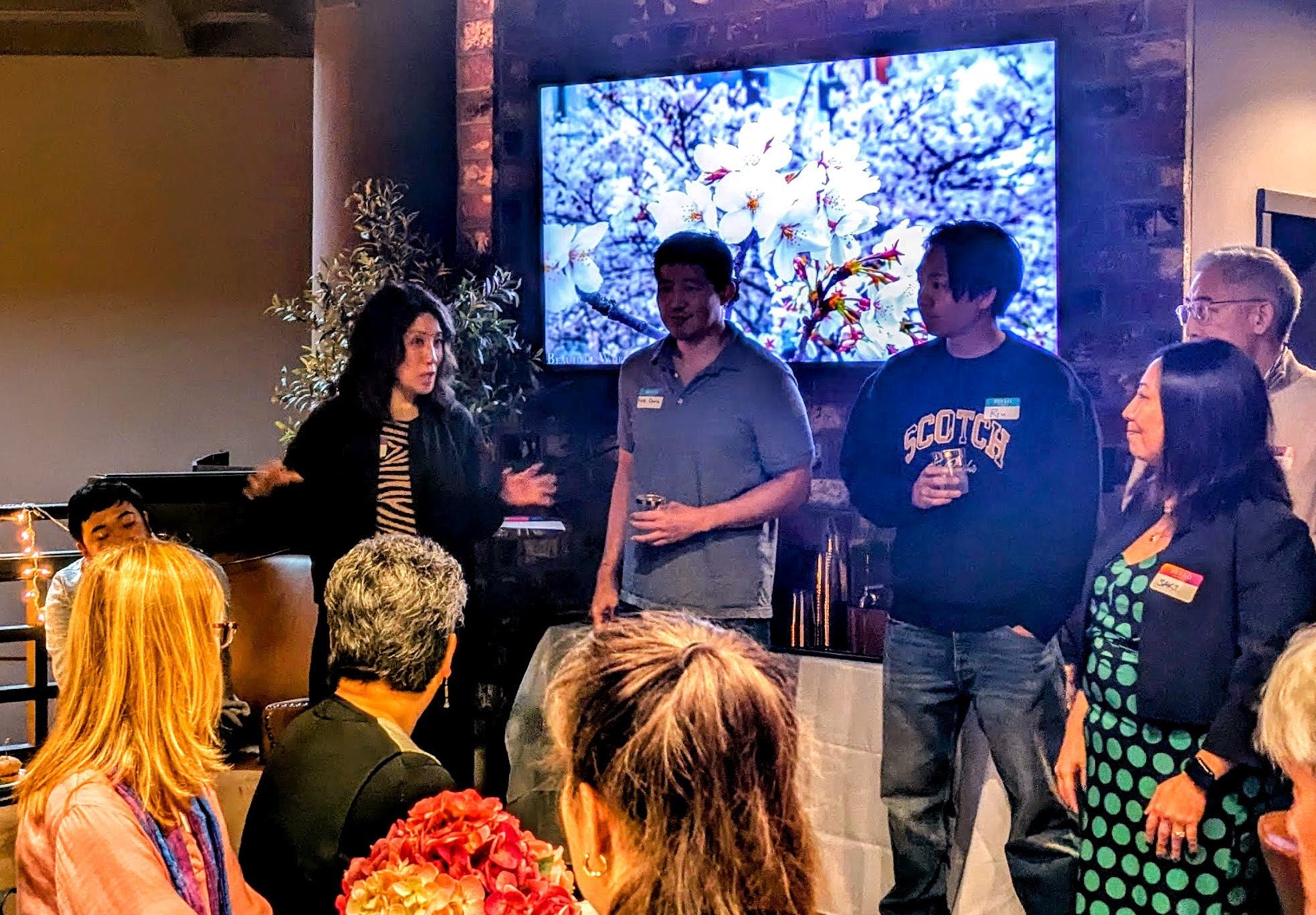
Throughout lunch, I met Japanese-Americans across generations, nisei, sansei, yonsei. each carrying their own version of what Japan means to them. Some talked about family histories that stretched back to stories they barely heard growing up. Others spoke about trying to reclaim traditions, language, or simple everyday habits that connected them to their roots. What struck me was how identity changes and reshapes itself over time, yet still holds a sense of home.
I was there with my Japanese husband, and for him, this gathering was especially meaningful. Living in the Bay Area, he doesn’t often get to meet and talk with other Japanese people outside our usual circles. Yesterday gave him that chance. I watched him fall into deep, animated discussions about the differences, and unexpected similarities, between Japanese perspectives and Japanese-American experiences. These were the kinds of conversations that only happen when you put people with shared heritage but different life paths in the same room. And naturally, he enjoyed every plate from the buffet as he did so.
Being at Fermentation Lab made me think again about how heritage works. Fermentation is slow, invisible, gradual. It transforms ingredients quietly over time into something richer and more complex. Cultural identity is much the same. What began generations ago in Japan has taken on new forms here in the U.S., shaped by place, history, and community. Yet the essence remains, familiar, nourishing, and deeply human.
Walking out into Japantown afterward, I realized how important these moments are. New friends, new insights, new layers of understanding, they’re what keep cultural ties alive. Not just for Japanese-Americans, but for anyone trying to hold on to meaningful threads across borders. Nothing about legacy is automatic. It survives because people choose to gather, to share stories, to reach across generations, and to welcome others in.
That’s what I carried home with me: the reminder that these connections, sometimes casual, sometimes profound, are what keep our stories alive. And sometimes all it takes is a Sunday lunchtime buffet, good company, and the right people in the room.
