


How well do we really know someone?
Last week, I wrote about Malice by Keigo Higashino, a novel that kept putting me on the back foot. Just when I thought I had worked out what was going on, another twist would force me to rethink everything.
This week, I stayed in the world of Japanese crime fiction with Confessions by Kanae Minato. The original Japanese title is 告白 Kokuhaku, which simply means "confession." In Japanese, though, the word often brings to mind a heartfelt admission or even a romantic declaration. Having lived in Japan for years, I couldn't help but think of all the dramas and stories where kokuhaku is the moment someone finally reveals their feelings.
There is nothing romantic about the confessions in this novel. Instead, each confession peels back another layer of grief, resentment, and revenge, revealing just how far people will go when consumed by their own sense of justice.
Click below to read more.
Being pleasantly outsmarted by a Japanese mystery novel
A couple of weeks ago, I wrote about how I relax with detective novels.
Most people probably don't hear "murder mystery" and think "self-care," but I've long since accepted that my brain is wired a little differently. Give me a quiet afternoon, a cup of tea, and a fictional homicide to solve, and I'm perfectly happy.
After recently enjoying Tokyo Express by Seichō Matsumoto, I decided to stay with Japanese detective fiction and listen to Malice by Keigo Higashino.
I thought I knew what I was getting into.
I was wrong.
And somehow it's absolutely gripping.
Click below to read more.
Finding calm in a Japanese train-timetable murder mystery
I've always found it slightly funny that one of my favorite ways to unwind is reading detective novels.
Most people relax by shutting their brains off. I relax by trying to solve fictional murders.
I just finished Tokyo Express by Seichō Matsumoto, a Japanese detective novel that was originally published in 1958. When I looked up the publication date afterwards, I honestly couldn't believe it. Apart from the absence of smartphones and email, it didn't feel dated at all.
The story starts with what appears to be a lovers' suicide, but two detectives become suspicious and start pulling on loose threads. Before long they're analyzing train schedules, station stops, travel times, and alibis in painstaking detail.
And somehow it's absolutely gripping.
Click below to read more.
Curiosity, compassion, and a Master Detective
I've been listening to the audiobook of My Grandfather, the Master Detective by Masatera Konishi, and it has turned out to be one of those rare books that is both comforting and genuinely thought-provoking.
Part of the enjoyment comes from the narration by Hanako Footman, whom I've written about before. She has an incredible ability to bring characters to life, and her performance adds warmth and nuance to every chapter.
The story centers on Kaede and her grandfather, a former mystery enthusiast whose life is complicated by dementia. What struck me most is the care with which the condition is portrayed.
Click below to read more.
The Vanishing Cherry Blossom Bookshop: sitting with what we lose
There are some books that do not ask much of you. They do not rush you or demand answers. They simply sit beside you while you hold what feels heavy.
The Vanishing Cherry Blossom Bookshop by Takuya Asakura felt like that kind of companion.
Reading it, I kept thinking about how loss is treated in Japan. Death is not always something to be explained or fixed. It is something that is acknowledged, given space, and woven gently into everyday life. Shrines appear at street corners. Names are spoken quietly. Seasons carry memory. Grief is allowed to exist without urgency.
The book carries that same softness. It does not turn away from death or absence. It stays with it. And in doing so, it creates room for healing that feels honest rather than forced.
Click below to read more.
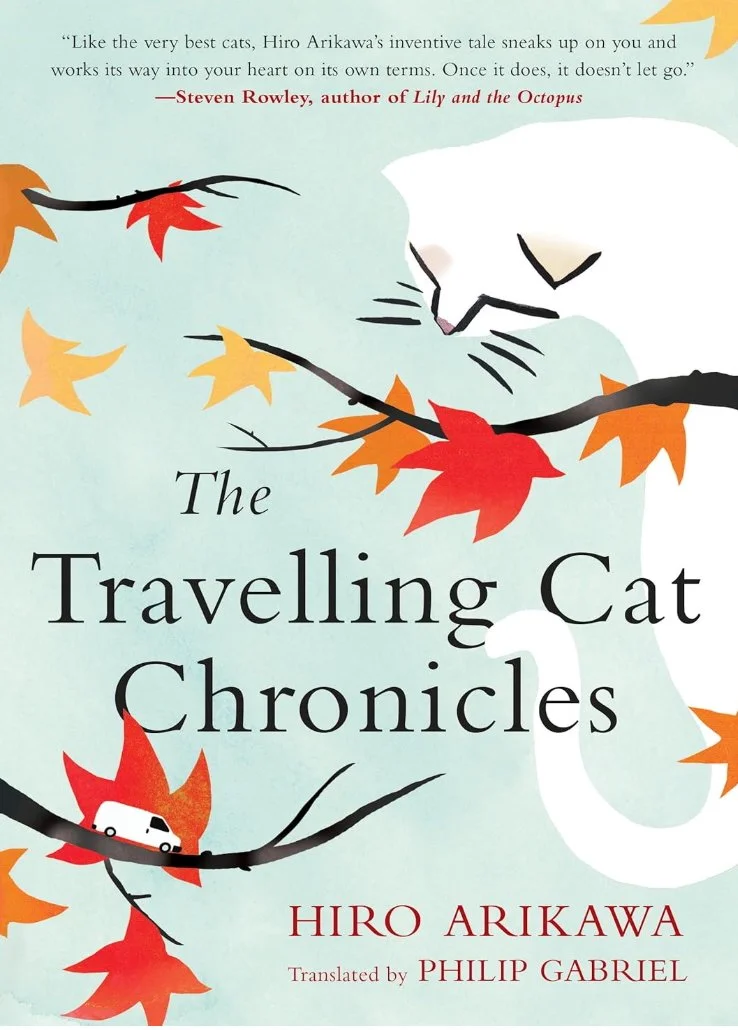
The Traveling Cat Chronicles made me cry in the best way
I spent this past week listening to The Travelling Cat Chronicles, and I wasn’t expecting it to move me the way it did. The story felt gentle at first, almost simple, but as it unfolded, it touched something deep: about life, friendship, and the quiet strength of commitment. Maybe it resonates more now that I’m getting older, when the bonds that endure feel even more precious.
The narration was a big part of why it stayed with me. George Blagden’s voice carried warmth and nuance, making every moment feel personal; sometimes light and amusing, sometimes heartbreakingly tender. It’s rare to find an audiobook where the performance feels like an extension of the story’s soul, but this was one of those times.
Click below to read more!

Nostalgia, melancholia, and the search for belonging: reflections between Tokyo and San Francisco
There’s a kind of quiet that settles in when you live abroad. Not silence exactly—Tokyo is anything but quiet—but something internal. A stillness. A pause. I felt it often when I lived there. It wasn’t loneliness, not really. More like a soft ache. A kind of melancholia that comes from being somewhere that doesn’t quite belong to you, and yet somehow feels like home.
Click below to read more.

Finding mindfulness in long-distance running. Shion Miura wrote another wonderful novel about perseverance, friendship and personal growth in Japan.
風が強く吹いている “Kaze ga Tsuyoku Fuiteiru”: The literal translation of the title is “the wind is blowing hard”, but you’ll find this title translated in English as “Run with the wind.” Although the theme is long-distance running, which has no connection to my personal world at all, I was soon captivated by the story. One reason is that the characters are all so alive and relatable, and the very Japanese “underdog makes it” theme is one I really like.