

The real lesson hidden inside our limits
Last week, I wrote about the joy of having something to look forward to. At the time, my upcoming trip to Japan felt comfortably distant. Now, with departure just around the corner, as I’m writing this post, anticipation has been joined by a familiar travel companion: anxiety.
Not because I'm worried about the trip itself.
In fact, quite the opposite.
I'm looking forward to returning to Japan, reconnecting with friends, participating in the GLOBIS International Alumni Reunion and US-Japan Council Member Days, and working with a client on a new HR project. It's a trip filled with many of the things I care deeply about: learning, relationships, meaningful work, and community.
The anxiety comes from the feeling that there is still so much to do before I leave.
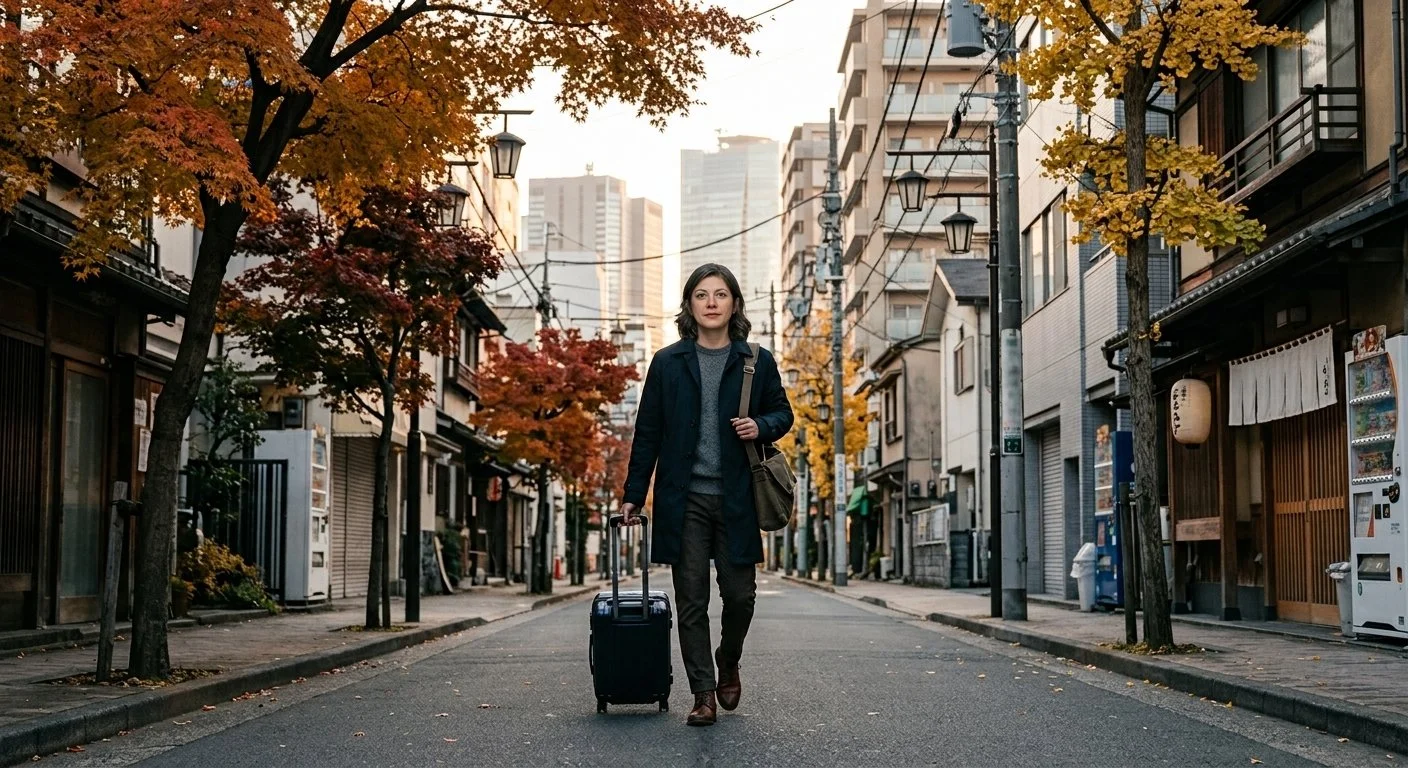
Every day seems to generate two new tasks for every one that gets completed. There are meetings to prepare for, emails to send, logistics to coordinate, and conversations I'd like to have before getting on the plane. As much as I enjoy being organized, there comes a point where even the best planning runs into a simple constraint: time.
There just isn't enough of it.
I suspect this is something many of us experience, especially when we are preparing for something important. We want to do everything well. We want to anticipate problems before they arise. We want to arrive fully prepared.
Yet at some point, the reality of our limits becomes impossible to ignore.
No matter how carefully I plan, I won't think of everything.
No matter how many items I check off my list, there will be others left unfinished.
No matter how much preparation I do, some things will unfold in ways I cannot predict.
Over the years, Japan has taught me many lessons, and one of them is the importance of accepting reality rather than fighting it. There is a Japanese expression, shikata ga nai, often translated as "it cannot be helped." I've always appreciated the practical wisdom behind it. It's not about giving up. It's about recognizing the difference between what can be influenced and what simply needs to be accepted.
As I prepare for this trip, I've been reminded that anxiety often grows when we focus too much on everything that remains undone. Our attention gets pulled toward gaps and imperfections rather than what has already been accomplished.
For me, the challenge this week has been remembering that preparation is not the same thing as perfection.
The purpose of preparation is to put ourselves in a position to make the most of an opportunity. It is not to eliminate every uncertainty before we begin.
When I think back on previous visits to Japan, I don't remember whether my packing was perfect or whether every email had been answered before departure. What stays with me are the conversations, the friendships, the unexpected encounters, and the experiences that could never have been planned in advance.
Those moments happened not because everything was perfectly organized, but because I showed up.
Perhaps that is the real lesson hidden inside our limits.
Sometimes mindfulness isn't about clearing our minds or reducing our stress. Sometimes it's simply about acknowledging that there will never be enough time to do everything and deciding to move forward anyway.
As I finish preparing for this journey, I'm trying to make peace with that reality. The to-do list may not be complete, but the opportunity ahead is still worth embracing.
And perhaps the most important thing to remember is that we don't need to be completely ready for the experiences that matter most.
Sometimes we simply need to begin.
