

What living in Japan taught me about Seneca's Definition of Happiness
Since moving to the United States after many years in Japan, I've found myself reflecting on the lessons that stayed with me. Some of them came from conversations, some from experiences, and some from Japanese expressions that carried more wisdom than I understood at the time. Recently, those memories came flooding back when I read a quote from Seneca: "To be happy, eliminate two things: the fear of a bad future and the memory of a bad past."
The quote resonated immediately because it describes a tendency I know all too well. Like many people, I can spend far too much time imagining problems that never materialize while replaying moments that cannot be changed. What struck me, though, was how much Seneca's observation echoed ideas I encountered during my years in Japan.
Click below to read more.

How well do we really know someone?
Last week, I wrote about Malice by Keigo Higashino, a novel that kept putting me on the back foot. Just when I thought I had worked out what was going on, another twist would force me to rethink everything.
This week, I stayed in the world of Japanese crime fiction with Confessions by Kanae Minato. The original Japanese title is 告白 Kokuhaku, which simply means "confession." In Japanese, though, the word often brings to mind a heartfelt admission or even a romantic declaration. Having lived in Japan for years, I couldn't help but think of all the dramas and stories where kokuhaku is the moment someone finally reveals their feelings.
There is nothing romantic about the confessions in this novel. Instead, each confession peels back another layer of grief, resentment, and revenge, revealing just how far people will go when consumed by their own sense of justice.
Click below to read more.
Being pleasantly outsmarted by a Japanese mystery novel
A couple of weeks ago, I wrote about how I relax with detective novels.
Most people probably don't hear "murder mystery" and think "self-care," but I've long since accepted that my brain is wired a little differently. Give me a quiet afternoon, a cup of tea, and a fictional homicide to solve, and I'm perfectly happy.
After recently enjoying Tokyo Express by Seichō Matsumoto, I decided to stay with Japanese detective fiction and listen to Malice by Keigo Higashino.
I thought I knew what I was getting into.
I was wrong.
And somehow it's absolutely gripping.
Click below to read more.
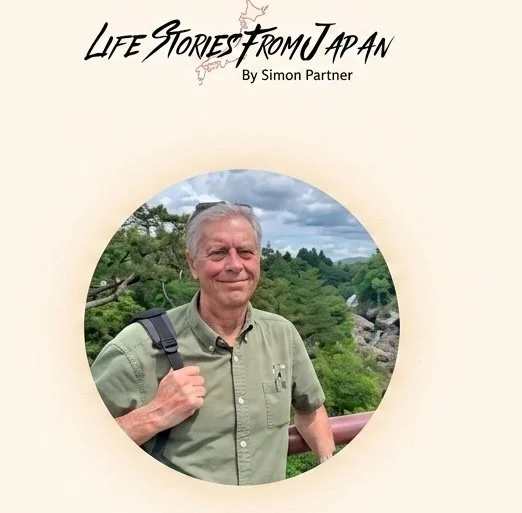
Life Stories from Japan: Bringing Japanese-American history to life through the lives that shaped it
One of my favorite things about living between cultures is that there is always another story waiting to be discovered.
A little while ago, I had the pleasure of meeting Simon Partner, a history professor at Duke University, at an event in San Francisco's Japantown. Simon was visiting the Bay Area for the summer, researching the rich history of Japanese-Americans in San Francisco. What started as a casual conversation quickly turned into one of those encounters that reminds me why I love connecting with people who are curious about the world.
Mindfulness is often associated with slowing down and being present. For me, it's also about noticing the stories, people, and histories that shape the communities around us. That is exactly what I found in Simon's Substack, Life Stories from Japan.
Click below to read more.
On gratitude, generosity and deafening silence
I've been thinking about something recently, and I'm curious whether I'm the only one noticing it.
Over the years, a lot of people have reached out to me asking for advice. Sometimes they're interested in working in Japan. Sometimes they're looking for information about Japanese companies, introductions to people in my network, or guidance on navigating a career change. Most of the time, I'm happy to help. I've been fortunate to have many people help me throughout my career, and sharing a bit of what I've learned feels like a small way to pay that forward.
What I've noticed lately, though, is how often the interaction simply ends once the help has been provided.
Click below to read more.
Finding our Ibasho 居場所
This week's Mindful Monday was inspired by a recent LinkedIn post from my friend Darren that asked three simple questions: Where were you born? Where do you live now? Where do you feel you belong?
My answers would be Belgium, the United States, and... I'm not entirely sure.
What I do know is that if you asked me where home is, I'd probably answer Japan or the U.S. It definitely wouldn't be Belgium.
That feels strange to say because I mostly lived in Belgium until I was 38. I then moved permanently to Japan, and later to the U.S. On paper, Belgium should be the obvious answer. It's where I spent most of my life.
But belonging doesn't seem to work like that.
Click below to read more.
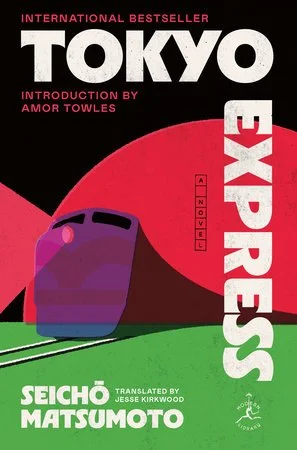
Finding calm in a Japanese train-timetable murder mystery
I've always found it slightly funny that one of my favorite ways to unwind is reading detective novels.
Most people relax by shutting their brains off. I relax by trying to solve fictional murders.
I just finished Tokyo Express by Seichō Matsumoto, a Japanese detective novel that was originally published in 1958. When I looked up the publication date afterwards, I honestly couldn't believe it. Apart from the absence of smartphones and email, it didn't feel dated at all.
The story starts with what appears to be a lovers' suicide, but two detectives become suspicious and start pulling on loose threads. Before long they're analyzing train schedules, station stops, travel times, and alibis in painstaking detail.
And somehow it's absolutely gripping.
Click below to read more.
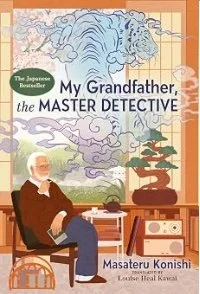
Curiosity, compassion, and a Master Detective
I've been listening to the audiobook of My Grandfather, the Master Detective by Masatera Konishi, and it has turned out to be one of those rare books that is both comforting and genuinely thought-provoking.
Part of the enjoyment comes from the narration by Hanako Footman, whom I've written about before. She has an incredible ability to bring characters to life, and her performance adds warmth and nuance to every chapter.
The story centers on Kaede and her grandfather, a former mystery enthusiast whose life is complicated by dementia. What struck me most is the care with which the condition is portrayed.
Click below to read more.