

What living in Japan taught me about Seneca's Definition of Happiness
Since moving to the United States after many years in Japan, I've found myself reflecting on the lessons that stayed with me. Some of them came from conversations, some from experiences, and some from Japanese expressions that carried more wisdom than I understood at the time. Recently, those memories came flooding back when I read a quote from Seneca: "To be happy, eliminate two things: the fear of a bad future and the memory of a bad past."
The quote resonated immediately because it describes a tendency I know all too well. Like many people, I can spend far too much time imagining problems that never materialize while replaying moments that cannot be changed. What struck me, though, was how much Seneca's observation echoed ideas I encountered during my years in Japan.
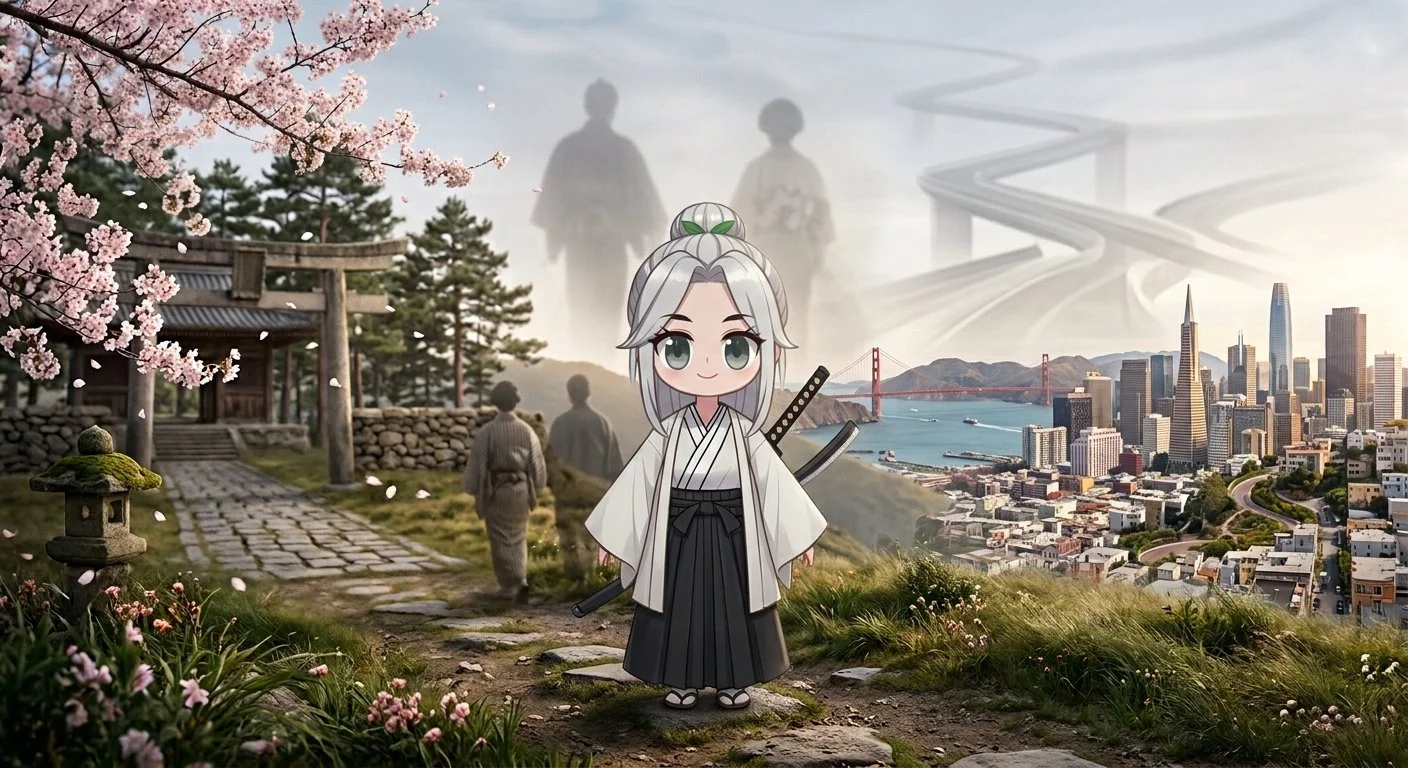
One of the first Japanese expressions that came to mind was shikata ga nai (仕方がない), often translated as "it can't be helped." People outside Japan sometimes hear this as resignation, but after years of living there, I've come to see it as something closer to acceptance. It doesn't mean giving up. It means recognizing the limits of what can be changed and choosing not to waste energy fighting reality.
That feels very close to what Seneca was saying.
Since moving to the United States after years in Japan, I've noticed this tension more clearly in myself. American culture rewards planning, striving, and staying one step ahead. Those qualities can be incredibly productive, but they can also pull us out of the present. It becomes easy to spend our days managing future possibilities rather than experiencing the life that is actually unfolding in front of us.
Japan certainly plans for the future too. Anyone who has worked in a Japanese company knows the amount of preparation that can go into even small decisions. But alongside that planning culture, I often found a greater willingness to accept uncertainty once everything reasonable had been done. At some point, people moved forward rather than endlessly obsessing over possible outcomes.
The second part of Seneca's quote, letting go of the memory of a bad past, reminds me of another Japanese idea: ichi-go ichi-e (一期一会). The phrase is often translated as "one time, one meeting," emphasizing that every moment is unique and will never happen again in exactly the same way.
When I first arrived in Japan, I made plenty of mistakes. Some were language mistakes. Some were cultural misunderstandings. Some were simply the mistakes that come from trying to build a life in a completely different country. For a long time, I replayed many of those moments in my head. I would think about what I should have said, how I should have behaved, or how I could have avoided embarrassment.
Over time, though, I started to appreciate the wisdom behind ichi-go ichi-e. That moment is gone. It cannot be recreated, corrected, or relived. The only thing still available is the present moment and what we choose to do with it.
There is also a very Japanese appreciation for impermanence. The annual excitement around cherry blossoms is not because they last. It is because they don't. Their beauty comes from their fleeting nature. Looking back, I think this cultural comfort with impermanence creates a healthier relationship with the past. Things bloom, things fade, and life moves on.
What I find fascinating is that a Roman Stoic philosopher and traditional Japanese ways of thinking arrive at remarkably similar conclusions despite developing worlds apart. Both encourage us to stop arguing with time. The future has not happened yet. The past is no longer here. Much of our suffering comes from trying to live in one of those places instead of the only place we actually exist.
Of course, this is easier to write than to practice.
I still worry about future projects. I still occasionally revisit old mistakes. I still find myself replaying conversations from years ago and imagining better responses long after they would have been useful. But perhaps the goal is not perfection. Perhaps the goal is simply noticing when our minds have wandered into a future that doesn't exist or a past that cannot be changed and gently bringing ourselves back.
That may be the lesson I have taken from both Seneca and my years in Japan.
Not that happiness comes from controlling everything around us. It comes from releasing our grip on the things that were never ours to control in the first place: the imagined future and the remembered past.
And then paying attention to what is happening right now.
