

Finding our Ibasho 居場所
This week's Mindful Monday was inspired by a recent LinkedIn post from my friend Darren that asked three simple questions: Where were you born? Where do you live now? Where do you feel you belong?
My answers would be Belgium, the United States, and... I'm not entirely sure.
What I do know is that if you asked me where home is, I'd probably answer Japan or the U.S. It definitely wouldn't be Belgium.
That feels strange to say because I mostly lived in Belgium until I was 38. I then moved permanently to Japan, and later to the U.S. On paper, Belgium should be the obvious answer. It's where I spent most of my life.
But belonging doesn't seem to work like that.
As I reflected on Darren's post, I found myself wondering whether home is less about where we spent the most time and more about where we became who we are.
When I think about the experiences that had the biggest positive impact on my life, most of them happened outside Belgium. Joining the JET Program at 22 completely changed the trajectory of my life. Years later, studying at GLOBIS and then living and working in Japan shaped me in ways I never could have anticipated. Many of the relationships, lessons, opportunities, and memories that define me today came from those experiences.
Belgium is where my story began. Japan is where much of my identity was formed. The U.S. is where the current chapter of my life is being written.
The Japanese have a word I really like: ibasho (居場所). It's often translated as "a place where you belong," but it's more than a physical place. It's where you can be yourself. Where you feel accepted. Where you feel connected.
And the more I thought about it, the more I realized that my biggest ibasho isn't actually a place at all.
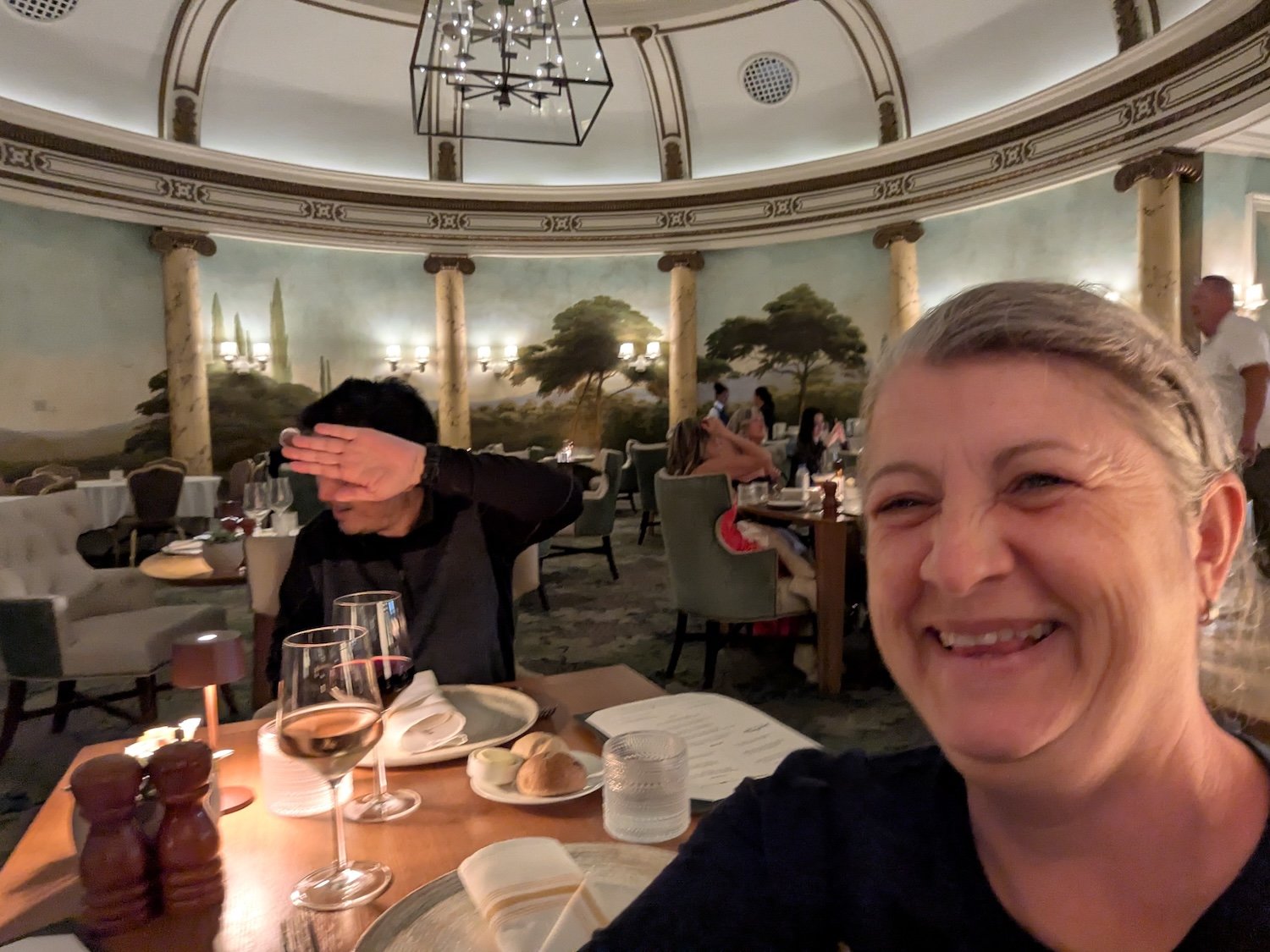
It's my husband.
When we decided to leave Japan, quite a few people were surprised. After all, I had always assumed I'd stay there forever. Japan had shaped so much of my adult life, and it felt like home in many ways. Yet I had remarkably little hesitation about uprooting myself and moving to an entirely new country.
Looking back, I think that's because my sense of belonging wasn't tied exclusively to Japan. The person who makes me feel most at home came with me.
The older I get, the more I think that's what we're really searching for. Not necessarily a country, city, or address, but an ibasho. Sometimes we find it in a place. Sometimes in a community. And sometimes in a person.
Perhaps that's why the question of where we belong can be so difficult to answer. For those of us who have lived in multiple countries, our ibasho may be spread across several places, memories, and relationships that we carry with us wherever we go.
