

From famine food to comfort food: Satsuma imo gohan
Today’s mindful thought comes straight from my rice cooker, which continues to prove that it may actually be the hardest‑working appliance in my kitchen. I finally tried making satsuma imo gohan, Japanese sweet potato rice, using the recipe from JustOneCookbook.com, and I’m annoyed with myself for not doing this years earlier. It is absurdly easy, almost suspiciously so, and yet the result tastes like something with a long, thoughtful tradition behind it.
You literally chop a satsuma imo, soak it for a bit, toss it on top of your washed rice, add water and a splash of seasonings, close the lid, and push the button. The rice cooker does all the work while you wander off and pretend you’re busy. When it pops open again, you’re greeted by fluffy rice dotted with soft, naturally sweet cubes of potato that somehow feel both comforting and elegant. It’s the kind of dish that makes you want to stand in the kitchen with the spoon and “just taste a little more” until half of it is mysteriously gone.
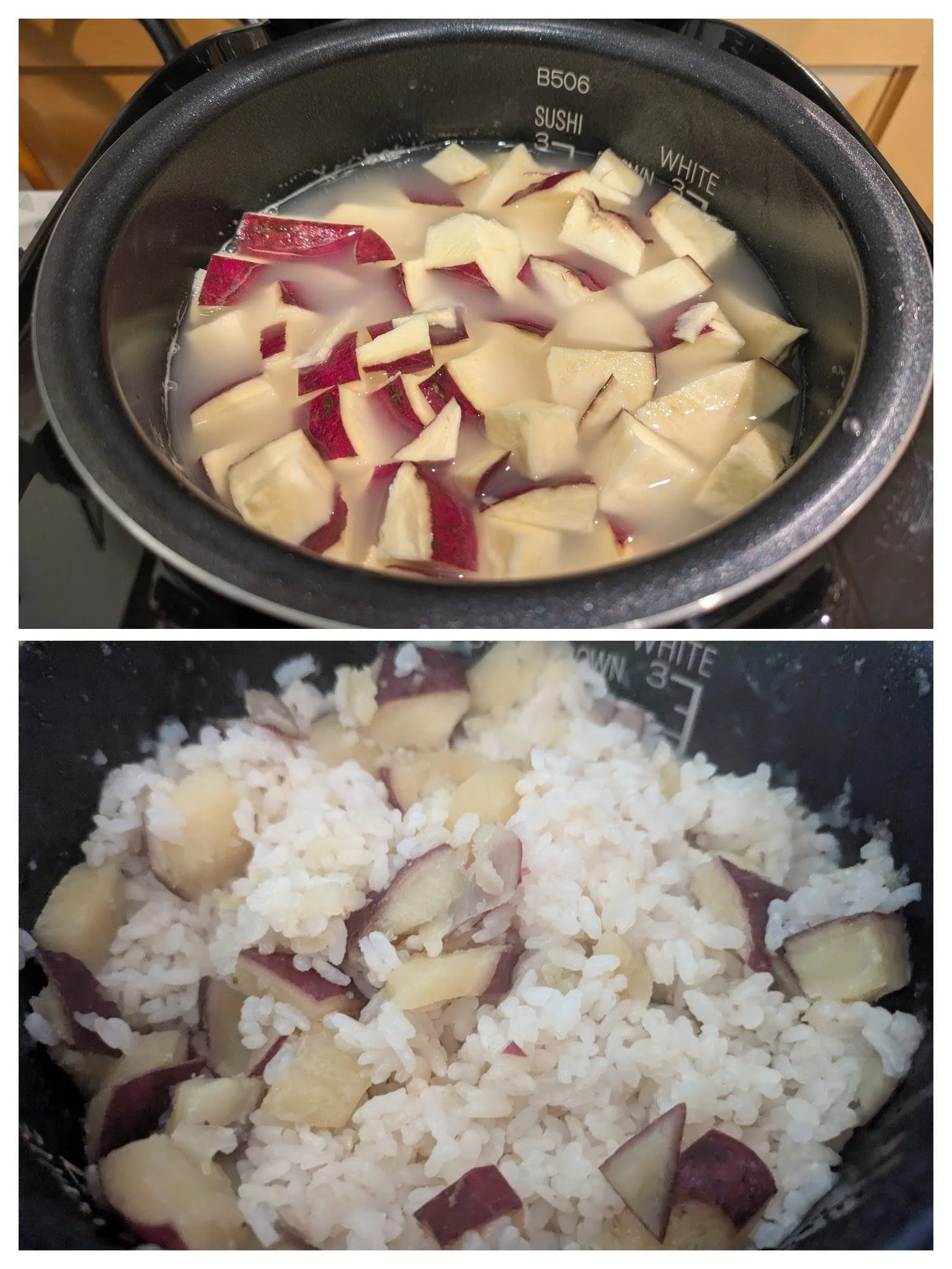
What I love is that this simple dish actually has a surprisingly rich history. Sweet potatoes came to Japan in the early 1700s via Ryukyu (Okinawa), where they were first cultivated because they grew well in poor soil and were resistant to typhoons. From there, they spread northward and eventually became a staple in times when rice harvests were unreliable. People would stretch their rice with sweet potatoes or other root vegetables to make it last longer.
What was once a practical solution slowly transformed into comfort food, then into something nostalgic, and now into a seasonal favorite that appears in autumn bento boxes and on family dinner tables. And here’s the bonus twist: while it’s considered an autumn dish, satsuma imo is easy to find in any season, which means this comforting, quietly delicious rice is always just one rice‑cooker button away.
In other words, satsuma imo gohan is a perfect example of how Japanese cuisine often works hard without looking like it’s working hard. There’s history, resourcefulness and regional culture behind it, but it still shows up in your kitchen as a dish you can make with almost no effort on a weeknight. And because it cooks together in the rice cooker, the starch from the potato subtly seasons the rice while the rice keeps the potato tender. Somehow it ends up tasting like more than the sum of two very simple ingredients.
Maybe that’s why I love it. It’s humble, it’s seasonal, and it fits perfectly into the slow, thoughtful rhythm of Japanese home cooking, even for someone like me who is usually eating dinner between meetings or while answering Slack messages.
So if you need something cozy, satisfying, and almost laughably easy, give satsuma imo gohan a try. Your rice cooker will feel very proud of itself, and your kitchen will smell like autumn decided to show up early.
