

May The Force be secure: A birthday reflection on technology and trust
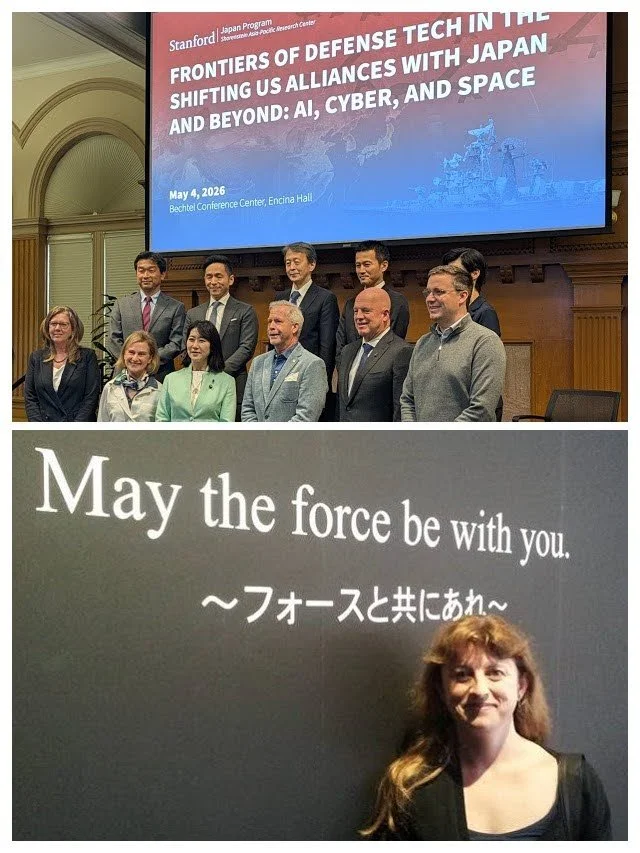
This past Monday, May 4th, I spent my birthday in an unexpected way. At Stanford University, joining a full day titled
Frontiers of Defense Tech in the Shifting US Alliances with Japan and Beyond: AI, Cyber, and Space.
Yes. May the Fourth. Star Wars Day.
I couldn’t help but smile at the coincidence.
On paper, that title sounds heavy. Defense. Alliances. AI. Cyber. Space. The kind of words that feel very far removed from everyday life. And yet, sitting there all day, listening to panel after panel, I found myself thinking less about governments and geopolitics and much more about daily life. About how quietly, deeply, and invisibly these technologies have already become part of how we live.
What struck me most was how often the conversations returned to the same idea. Defense tech is no longer something that sits in a separate, sealed-off world. It has become deeply dual-use. The same technologies that protect national security also power civilian life.
AI that helps detect cyber threats also runs customer service tools and medical diagnostics. Cybersecurity systems designed to defend governments are the same ones protecting hospitals, banks, and schools. Space technologies that enable military operations are the very systems that make GPS work, allow ATMs to function, help farmers monitor crops, and warn us about extreme weather.
This is no longer abstract.
It’s personal.
We talked a lot about space, and not in a sci-fi way. Very practical, almost mundane ways. Satellites underpin so much of modern life that we only notice them when something breaks. Navigation, communication, financial transactions, energy infrastructure, disaster response. When those systems fail, daily life comes to a halt.
I also kept hearing how fast everything is moving. Faster than laws. Faster than institutions. Faster than most people’s understanding. AI and cyber capabilities are evolving at a speed that makes governance and trust much harder to sustain.
And that’s where my birthday reflection landed.
We often treat these topics as things “experts will handle.” Defense officials. Policymakers. Engineers in labs we’ll never see. But when technologies shape trust, safety, and economic stability at this level, they quietly become everyone’s business.
We don’t all need to become specialists. But we do need to be more aware. To understand enough to ask questions. To recognize that this is not just about defense or geopolitics, but about the systems we rely on every single day.
One comment stayed with me from the conference. In democracies, resilience isn’t only about technology or infrastructure. It’s about people. About public understanding. About trust. About whether citizens feel informed or simply overwhelmed.
That resonated deeply.
As regular people, we live inside these systems. We click accept. We trust the cloud. We assume things will work. But the line between “defense tech” and “daily life tech” has blurred so completely that pretending it’s someone else’s responsibility no longer makes sense.
So spending my birthday there, listening, reflecting, and learning, felt oddly appropriate. Another year older. Another reminder that the world is complex, interconnected, and moving quickly. And that opting out of understanding is no longer really an option.
This Mindful Monday, I’m taking one intention with me.
To stay curious rather than intimidated. To learn just enough to engage. And to remember that awareness itself is part of resilience.
Also, all things considered, it was a pretty memorable way to spend Star Wars Day.
May the Fourth remind us not just to enjoy the Force, but to understand how it works, and how deeply it now runs through our everyday lives.
