

Cool Biz gets real: Shorts to combat “Cruelly Hot” summers
Every summer in Japan, you can feel the quiet shift. Jackets disappear, ties loosen, and everyone renegotiates what “professional” looks like in serious heat. Cool Biz has been around for years, but this summer feels different.
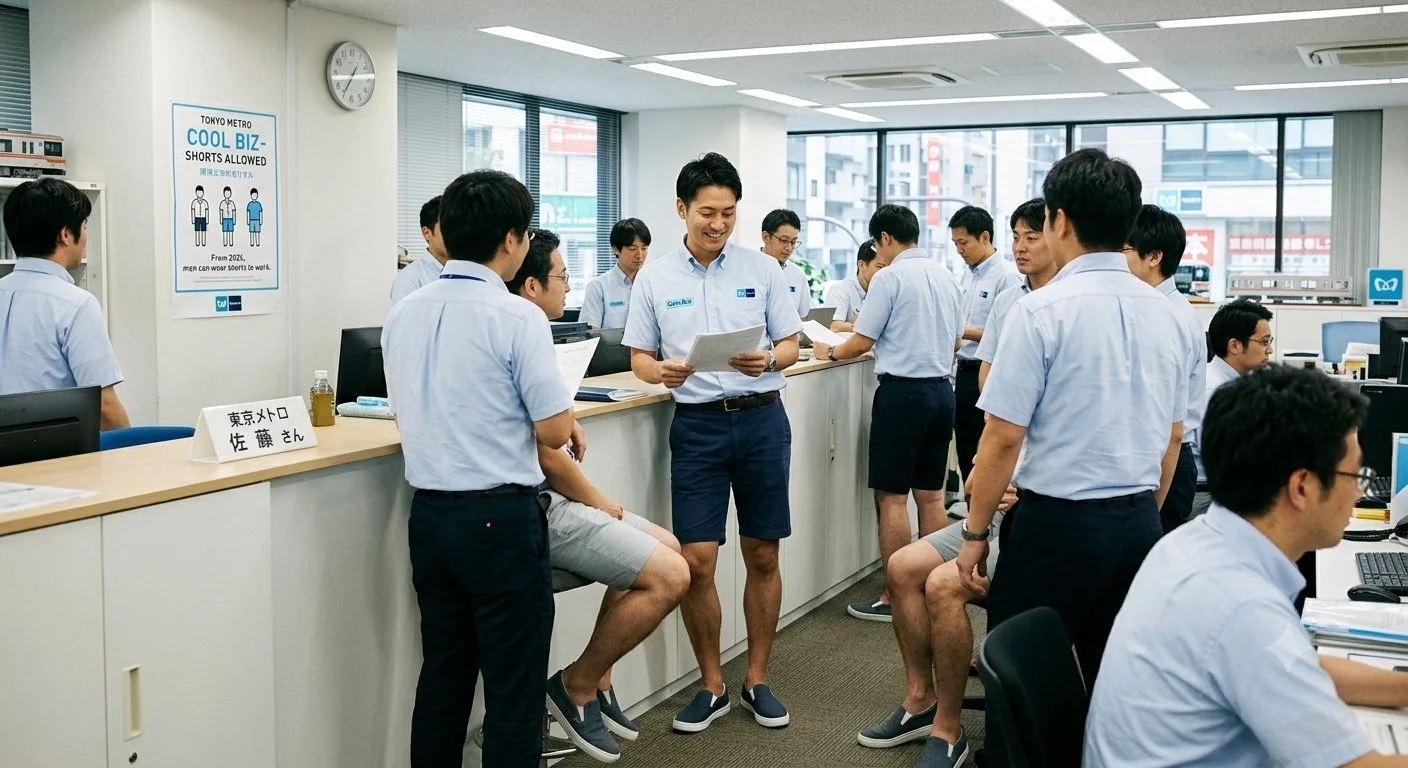
The Tokyo Metropolitan Government has now officially updated its guidance to allow staff to wear shorts and sneakers. Governor Koike positioned it very clearly as a response to extreme heat and a tighter electricity outlook, with rising energy costs linked to the ongoing Middle East war. After last year’s record temperatures and the introduction of a “cruelly hot” category by the meteorological agency, it’s hard to argue this isn’t necessary. They’re also encouraging earlier start times to reduce strain on the grid.
What’s new is that this is visible. There’s already some early media coverage showing government employees experimenting with polo shirts and tailored shorts. If you’ve worked in Japan, you’ll know that crossing that line is not a small thing. The reactions I’ve been hearing are interesting. Women’s responses in particular are more layered than you might expect.
There’s a bit of quiet humor in “we’ve been adjusting for years.” And it’s true. Women have long had more flexibility in summer workwear, but also more scrutiny. I still remember being told off early in my career for not wearing pantyhose on a very hot day. That expectation to look polished doesn’t disappear just because the temperature rises.
So when men are newly and explicitly allowed more comfort, it does raise questions about balance. Not in a dramatic way, but enough that people notice.
There are also very practical reactions. One comment I heard recently, half joking but very real, was that people are not quite ready for hairy knees in the office. Which sounds light, but actually gets at something deeper in Japan: it’s not just what’s allowed, it’s how it looks, and how it reflects on the group.
At the same time, there is broad agreement on the direction. The heat is no longer something you can just power through. Comfort, productivity, and even energy policy are now tied together.
Like most things here, adoption will be gradual. It will show up first in internal settings, styled carefully, and spread as people see what feels acceptable.
It’s a small change on the surface, but it reflects a bigger one underneath. The definition of professionalism is slowly stretching, shaped as much by climate and economics as by culture.
And in a Japanese workplace, that kind of quiet shift is usually where real change starts.
Want to learn more about Japanese business practices and how to succeed in cross-cultural environments?
Join one of JCO’s programs and gain practical insights into Japan’s unique business culture, communication styles, and strategies for collaboration. Together, we can create more opportunities for global success.
If you want to learn more about bridging language and cultural gaps in Japanese business, why not join one of our sessions! Here’s the link to upcoming sessions (make sure to select your timezone)
