

GLOBIS SV G1 Summit final part: "A new golden age of the US‑Japan alliance. Where do we go from here?”
The G1 Summit, convened by GLOBIS, is a leadership forum grounded in action. Its principles are to make proposals rather than criticize, to act rather than stay theoretical, and to cultivate awareness as leaders responsible for society. What makes G1 particularly meaningful for me is how consistently it places Japan at the center of global conversations, not as a follower, but as a shaper.
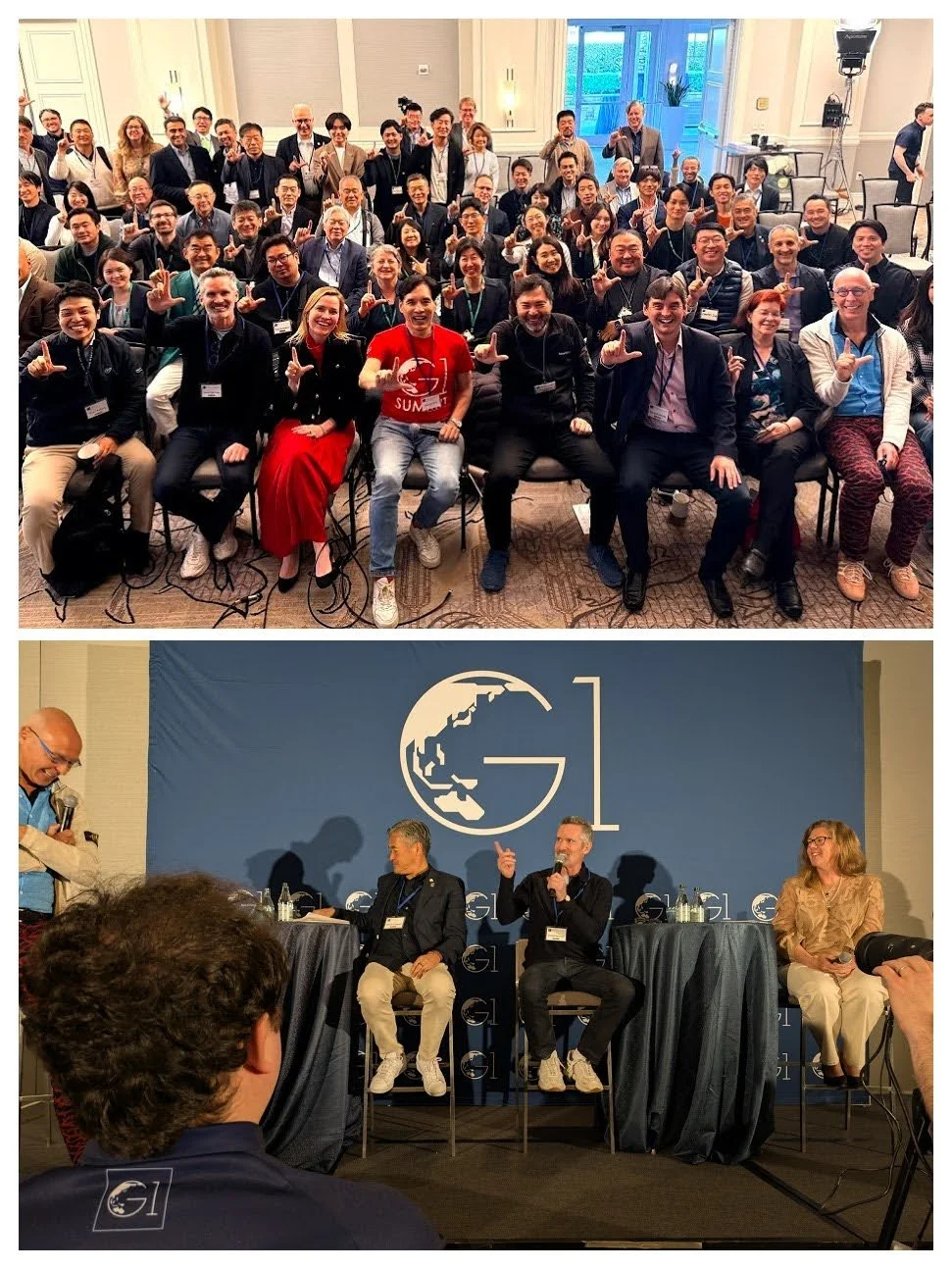
I attended the closing session, “New Golden Age of the US‑Japan Alliance: Where Do We Go From Here?” as a GLOBIS MBA alumna and on behalf of Japan Consulting Office. It felt fitting that this conversation came at the end of G1. It was less about diagnosis and more about responsibility. Less about what is happening, and more about what Japan and the US choose to do next.
The framing of a “new golden age” was deliberately provocative. Not celebratory, but conditional.
Strengths that are complementary, not identical
One of the most constructive aspects of the session was how clearly the strengths of each country were articulated without comparison or competition.
Japan’s strength was repeatedly described as soft power, trust, and social cohesion. Japan is not divisive. That alone is becoming a strategic asset in a fragmented world. There was also emphasis on the quality of Japan’s workforce and a quiet but important shift in management mindset that is beginning to value adaptability alongside stability.
The US, by contrast, was consistently associated with innovation and technological leadership. Even critics acknowledged that the US still leads by example when it comes to breaking ossified systems and forcing change.
What struck me was how often speakers emphasized that trust cannot be bought. Japan’s ability to act as a mediator, especially if it gains more confidence in itself, may be one of its most underutilized strengths.
Weaknesses that require honesty
The session did not shy away from weaknesses, particularly those that are uncomfortable to name.
For Japan, confidence came up repeatedly. Confidence in its own leadership, and confidence in the reliability of the US. Japan has capability, but still hesitates to fully step into a larger global role.
For the US, the critique was sharper. The country has become more insular, more transactional, and in many ways has lost its sense of shared purpose. “US first” was described not as strategy, but as a negative posture that erodes trust.
There was also recognition that Japan’s strongest triangle right now may be between academia and corporations, with government struggling to keep pace. That imbalance is not sustainable in the long run.
Opportunities that demand action
The opportunity space described in the session was wide, but not abstract.
Space emerged as a concrete area where Japan and the US can build together, combining industrial strength with advanced technology. AI was another obvious pillar, particularly where US foundational technologies can be paired with Japanese application, discipline, and manufacturing data.
Dual‑use technology was described as a major inflection point. Not just for defense, but for industrial competitiveness more broadly. This is a moment where alignment matters, and where delay has real cost.
One of the most hopeful themes was generational change in Japan. As the Showa generation transitions out of leadership, there is space for restructuring, consolidation, and sharper focus on core competencies. This next generation of Japanese leaders may be better positioned to act decisively, if they are given room to do so.
Threats that cannot be ignored
The threats discussed were sobering, but necessary.
AI itself was named as a shared risk if not governed thoughtfully. Not because it will replace humans overnight, but because it amplifies existing power structures and failures.
Political chaos was another recurring theme. Normalizing the use of military power to “take what you want” was described as deeply dangerous. Disorder is not neutral. It rewards aggression.
Japan’s vulnerability around energy and self‑sufficiency was also highlighted, particularly in the context of unnecessary conflict. Strategic autonomy means very little without energy security.
Finally, there was a warning about government intervention done poorly. Protection in the name of local industry can easily become artificial monopoly, stifling competition and killing the very startups needed for renewal.
What I took away, and where this series ends
What stayed with me most from this final session was the sense that the US‑Japan alliance is no longer defined by history, but by choice.
This is not a golden age by default. It only becomes one if Japan steps forward with confidence, and if the US remembers that leadership is built on trust, not dominance.
Across all the G1 sessions I attended, a consistent message emerged. Japan is stable, trusted, and increasingly capable. But stability alone is no longer enough. Leadership now requires speed, clarity, and the willingness to act under constraint.
From where I sit, working between Japan and the US, this feels like a hinge moment. Japan has the opportunity to play a larger global role without abandoning its identity. The US has the opportunity to renew its leadership by opening up, rather than pulling inward.
The G1 Summit did not offer easy answers. What it offered was something more valuable. A space to think seriously about responsibility.
This series began with the idea of action over criticism. It ends with a quieter but more demanding question. If this truly is a new golden age for the US‑Japan alliance, what kind of leaders are we willing to be to make it real?
For me, that is where the real work begins.
Want to learn more about Japanese business practices and how to succeed in cross-cultural environments?
Join one of JCO’s programs and gain practical insights into Japan’s unique business culture, communication styles, and strategies for collaboration. Together, we can create more opportunities for global success.
If you want to learn more about bridging language and cultural gaps in Japanese business, why not join one of our sessions! Here’s the link to upcoming sessions (make sure to select your timezone)
