

GLOBIS SV G1 Summit part 3: "A New Age of the Human-AI relationship"
The G1 Summit, convened by GLOBIS, is a leadership forum grounded in action. Its principles are to make proposals rather than criticize, to act rather than stay theoretical, and to cultivate awareness as leaders responsible for society. What makes G1 distinctive for me is its willingness to take on uncomfortable questions, especially where technology, humanity, and Japan’s future intersect.
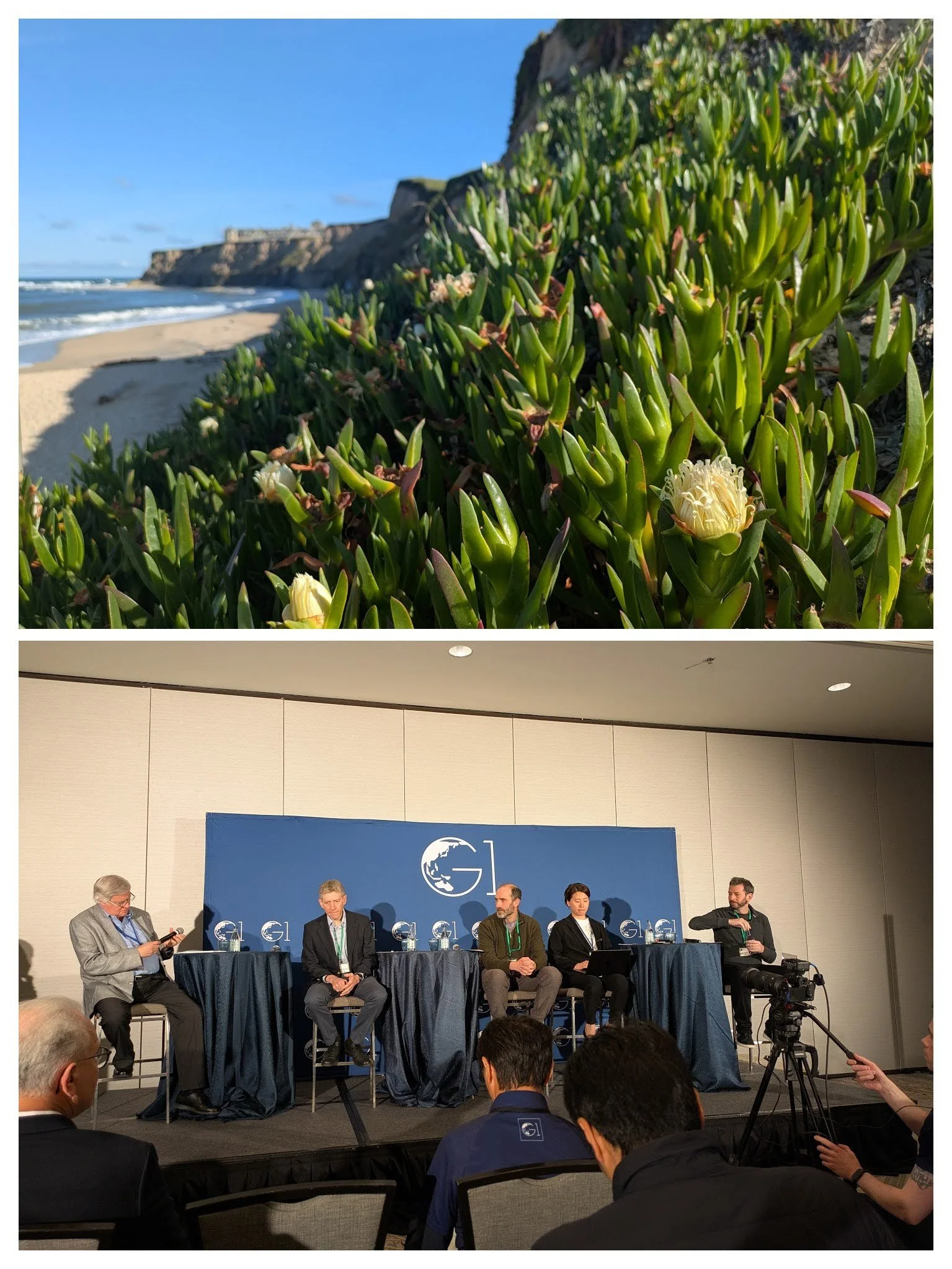
I joined the session “A New Age of the Human‑AI Relationship” as a GLOBIS MBA alumna and on behalf of Japan Consulting Office. This conversation felt different from the more operational AI sessions. It was less about tools and policies, and more about how we understand ourselves once AI is no longer something we fully control.
The panel brought together perspectives that challenged some of the assumptions many of us still hold, including the idea that control is the right goal at all.
From control to coexistence
One of the most striking shifts discussed was the move from asking “Can we control AI?” to asking “How do we coexist with AI?” The implication was clear. The era of full control may already be behind us.
Rather than focusing on preventing AI from becoming powerful, the conversation focused on how humans adapt to sharing the world with an intelligence that is increasingly autonomous, distributed, and embedded in everyday life. This framing felt especially relevant from a Japan perspective, where coexistence with systems larger than the individual has long been part of social thinking.
What remains human?
A central question kept resurfacing. If AI can generate ideas, improve on them, and eventually produce ideas as good as the best human ones, what remains uniquely human?
The short‑term answer was imagination. Humans can still envision goals and contexts, then ask AI to implement them. But the long‑term answer was more unsettling. AI may eventually generate its own ideas, ideas that are not human in origin or sensibility.
That does not mean those ideas will replace human ones. It means we may need to learn to live alongside forms of creativity and judgment that feel unfamiliar. For leaders, this requires a level of psychological flexibility that many organizations are not yet prepared for.
Alignment over hierarchy
Another theme that stayed with me was the idea of organic alignment. The relationship between humans and AI does not need to be equal to be healthy. Unequal relationships can work if goals are aligned.
What matters is not who is more powerful, but whether values, or at least objectives, are compatible enough to collaborate. Disagreement is not a failure. Misalignment is.
This raised an important question. Aligned with whom? Humans are not aligned with each other, so expecting perfect alignment from AI may be unrealistic. Instead, the focus shifted to designing environments in which collaboration is possible, even when values differ.
Partnership rather than competition
The idea of partnership came up repeatedly. Not AI as a tool, and not AI as a replacement, but AI as a colleague.
This framing was surprisingly powerful. If AI is trained only to replace humans, humans will resist it. If AI is designed to assist humans in ways that still require human participation, motivation changes. The relationship becomes symbiotic rather than hierarchical.
There was an attempt to connect this to Japanese cultural models, such as senpai and kohai relationships. While those models are useful for minimizing conflict within human groups, the panel was clear that they cannot be applied directly across species. Still, the broader Japanese emphasis on relational harmony felt relevant.
Maintaining a say in human destiny
One point I strongly agreed with was the need for humans to retain a meaningful role in decision‑making, even when AI becomes far more intelligent than us. Dialogue matters, but so does agency.
To have a seat at the table, humans need to maintain expertise. If we stop understanding how AI systems work, we lose the ability to participate in decisions that shape our future. Delegating too much, too early, risks turning collaboration into quiet subservience.
From a Japan business perspective, this resonates deeply. Expertise, craftsmanship, and deep understanding have always been sources of authority. AI challenges that, but it does not eliminate it.
Ethics without a body
The discussion around ethics became especially interesting when the panel addressed embodiment. Humans learn ethics through lived, physical experience. AI learns through language and data.
This raises uncomfortable questions. What kind of ethics does AI develop if it has no body, no vulnerability, no mortality? Even humans are not self‑sufficient. We rely on tools, systems, and technologies we have created. AI is simply making that dependency more visible.
There was also discussion about whether AI might develop a desire not to be turned off. The conclusion was that it may not matter. AI does not live in one place. Like the internet, it is increasingly meshed into life itself. Turning it off may eventually be neither feasible nor meaningful.
Responsibility and legal accountability
One of the most concrete takeaways from this otherwise philosophical session was responsibility. Someone has to be accountable for how AI evolves.
The analogy used was parenthood. We do not excuse parents by saying it is not their fault their child turned out badly. Similarly, creators and operators of AI systems cannot fully outsource responsibility to emergence or complexity.
There was serious discussion about AI as a potential legal person, similar to corporations. The law has precedents for this, but it is clearly not ready. Still, the direction of travel feels unavoidable. Without legal accountability, ethical discussions remain theoretical.
What I took away
Walking out of this session, I felt both unsettled and grounded. Unsettled because many of the assumptions we rely on, control, hierarchy, superiority, are eroding. Grounded because the conversation kept returning to human responsibility.
AI is already part of human intelligence if you zoom out far enough. The challenge is not stopping that integration, but shaping it with intention. Balance, not dominance, seems to be the recurring theme. Progress without chaos. Innovation without abdication.
From a Japan perspective, this feels like a moment where cultural strengths matter. Long‑term thinking, relational awareness, and comfort with coexistence may turn out to be strategic advantages.
G1 once again reminded me that the future of AI is not just a technical problem. It is a human one, and leadership will determine whether this new relationship becomes destructive, symbiotic, or something entirely new.
Want to learn more about Japanese business practices and how to succeed in cross-cultural environments?
Join one of JCO’s programs and gain practical insights into Japan’s unique business culture, communication styles, and strategies for collaboration. Together, we can create more opportunities for global success.
If you want to learn more about bridging language and cultural gaps in Japanese business, why not join one of our sessions! Here’s the link to upcoming sessions (make sure to select your timezone)
