
HRBP Transformation: what do you bring to the table?
Last week, while I was in Tokyo, I had the opportunity to work with one of my JCO colleagues on an HRBP transformation project. Part of that work involved facilitating a session in Japanese in Shinagawa’s Tower A, which made the experience particularly meaningful for me.
For three years, I worked in Tower C. Getting off the train at Shinagawa Station and making that familiar walk toward the office towers again was quite a trip down memory lane. So much has happened since then, yet there I was, heading almost to the same place. Just a different tower and in a very different role.
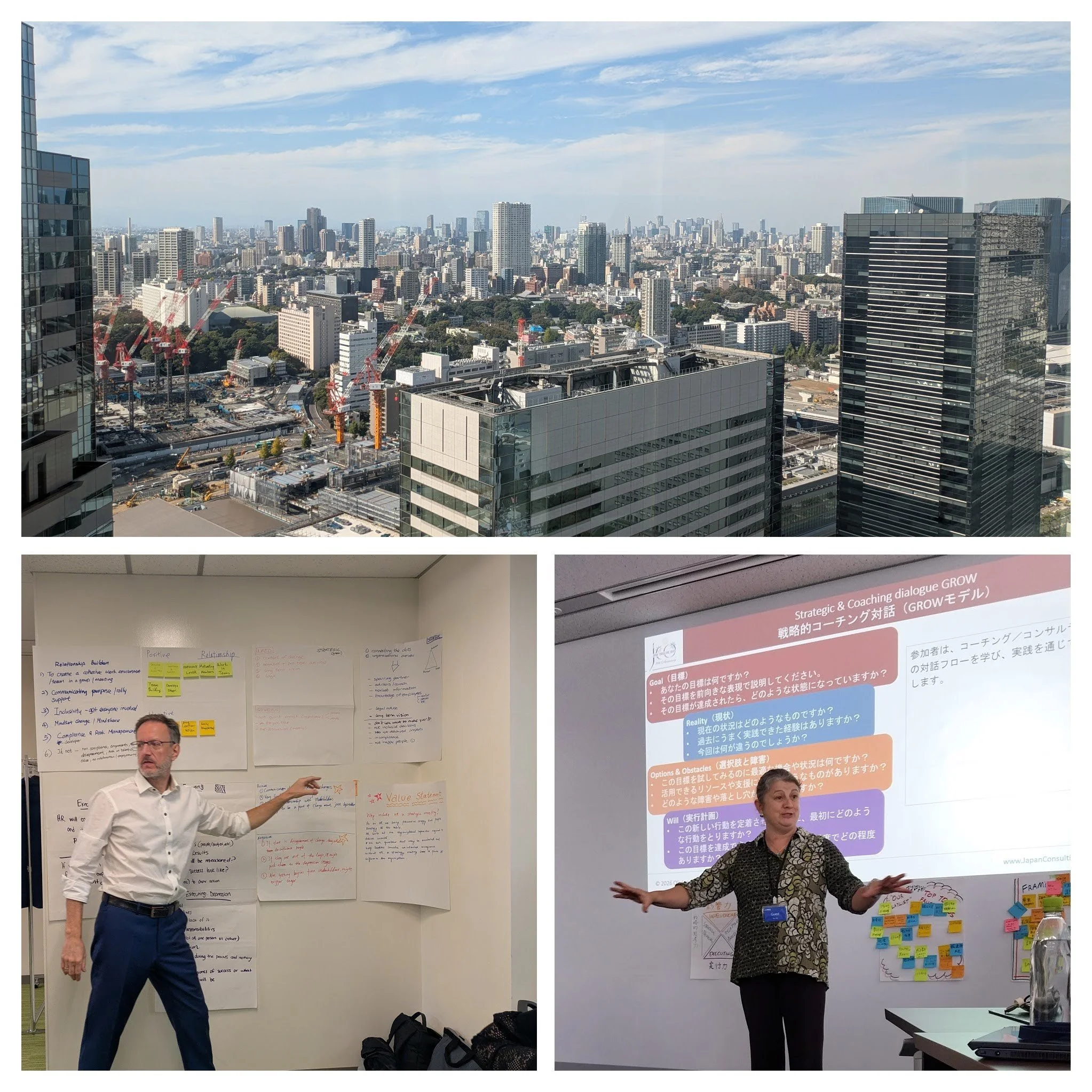
This time, I was there to facilitate conversations about HR and what it really means to become an HR Business Partner. When companies talk about HRBP transformation, it’s easy to focus on structure and responsibilities. What should HR Operations handle? What should managers own? And what exactly should an HRBP do?
Those questions matter, but changing responsibilities doesn’t necessarily change how HR operates. You can give someone the title of HR Business Partner and still have them spending most of their time responding to requests and managing transactions. The more interesting question is: What value does HR actually bring to the business?
One of the ways we explored that question was through Gallup’s CliftonStrengths model. I like strengths-based conversations because they start from a different place. Instead of asking what someone needs to be better at, we can ask: What do I naturally do well, and how can I use that to create greater value?
There isn’t one perfect strengths profile for an HRBP. Someone who naturally builds relationships may be particularly good at creating the trust that allows a manager to speak honestly about challenges on their team. Someone who thinks strategically may see the people implications of a business decision before others do. Someone focused on execution may excel at turning a good conversation into actual change. Different strengths can create value in very different ways.
I think that distinction is particularly useful for HR because we’re generally good at explaining what HR does: recruiting, performance management, employee relations, compensation, training, policies, and compliance. But describing what we do isn’t the same as describing the value we create.
For an HRBP, sometimes that value is asking the question that hasn’t been asked. Sometimes it’s recognizing what a manager isn’t saying or connecting a business decision today with a talent challenge that may emerge months from now. And sometimes it’s having enough trust with a leader to simply ask, “Have you thought about this differently?”
Facilitating this conversation in Japanese made the experience even more meaningful for me. I certainly wouldn’t have predicted during my years in Tower C that I would one day return to Shinagawa to facilitate an HR transformation discussion in Japanese. Yet last week, several different threads of my career came together in one very familiar place.
Careers are funny that way. We spend a lot of time wondering what comes next, when often the experiences we’re having today are preparing us for opportunities we can’t yet see.
Maybe strengths work the same way. The goal isn’t to become good at everything or fit some predetermined picture of the perfect HR Business Partner. It’s to understand what you already bring to the table and become much more intentional about how you use it.
And perhaps that’s a pretty good place for HRBP transformation to start.
Want to learn more about Japanese business practices and how to succeed in global environments?
Join one of JCO’s programs and gain practical insights into Japan’s unique business culture, communication styles, and strategies for collaboration. Together, we can create more opportunities for global success.
If you want to learn more about bridging language and cultural gaps in Japanese business, why not join one of our sessions! Here’s the link to upcoming sessions (make sure to select your timezone)
