

Experimenting with Kombucha in a Kombu‑cha household
This week’s Fun Friday topic comes from my kitchen rather than a conference room and involves a bubbling jar that has caused more than one raised eyebrow in my very Japan-focused world.
Yes, I’ve started making kombucha. And no, I do not mean kombu-cha, the comforting Japanese seaweed tea many of us know and love. That distinction has become surprisingly important.
Like many people, I was first introduced to kombucha as something you buy, not something you raise. It shows up in health food stores looking suspiciously like soda, tastes somewhere between vinegar and fruit juice, and promises all kinds of gut-related miracles. At some point, possibly after one too many conversations about fermentation traditions in Japan, I thought it might be interesting to try making it myself.
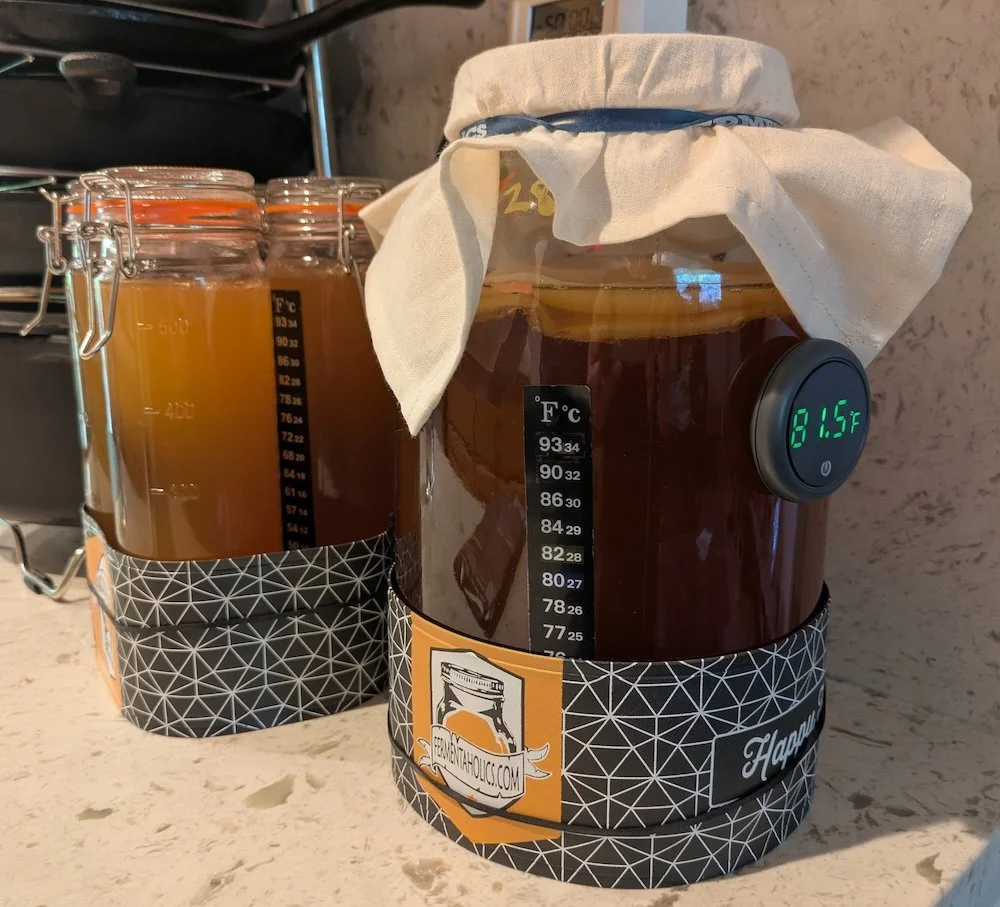
That is how a SCOBY entered my life. For the uninitiated, it stands for a Symbiotic Culture of Bacteria and Yeast, which sounds like a cross-border project team but behaves more like a sentient pancake.
Suddenly the kitchen counter looked less like California and more like a small fermentation lab, complete with jars of tea and a quietly working culture that I checked on with far more enthusiasm than my husband thought reasonable. I also learned that if you want bubbles, there is a second fermentation involved, and that this comes with its own learning curve. Too little time and it is flat. Too much enthusiasm and you start opening bottles very carefully.
Because I work so closely with Japan, this hobby immediately required an explanation. In Japanese, kombu-cha refers to a warm, savory tea made from kelp, something familiar and comforting. Kombucha, on the other hand, is fermented, tangy, lightly fizzy, and definitely not made from seaweed. It is also not something you would normally offer guests without a warning. The number of times I have had to clarify that it is not that kind of kombu-cha has become part of the experience.
What has surprised me most is how familiar the mindset feels. Japan has a long relationship with fermentation, and the patience it requires feels very recognizable. You set things up carefully, pay attention to the environment, and trust a process that is mostly invisible while it is happening.
Will I keep making kombucha? Probably. Will my husband ever fully approve of the smell or the occasional dramatic bottle opening? That remains to be seen. But this little experiment has been a good reminder that language, culture, and even tea can surprise us, and that some of the most memorable lessons happen far away from meeting rooms.
