

If you’ve ever wandered through Kamakura, or better yet, hopped on the charming Enoden line, you know this coastal region is full of surprises. Temples tucked into hillsides, hydrangeas blooming along railway tracks, and little details that make you stop and smile. Today’s photo is one of those details: four tiny metal birds perched on a rail, dressed head-to-tail in bright red knitwear.
Yes, you read that right: knitwear for birds.
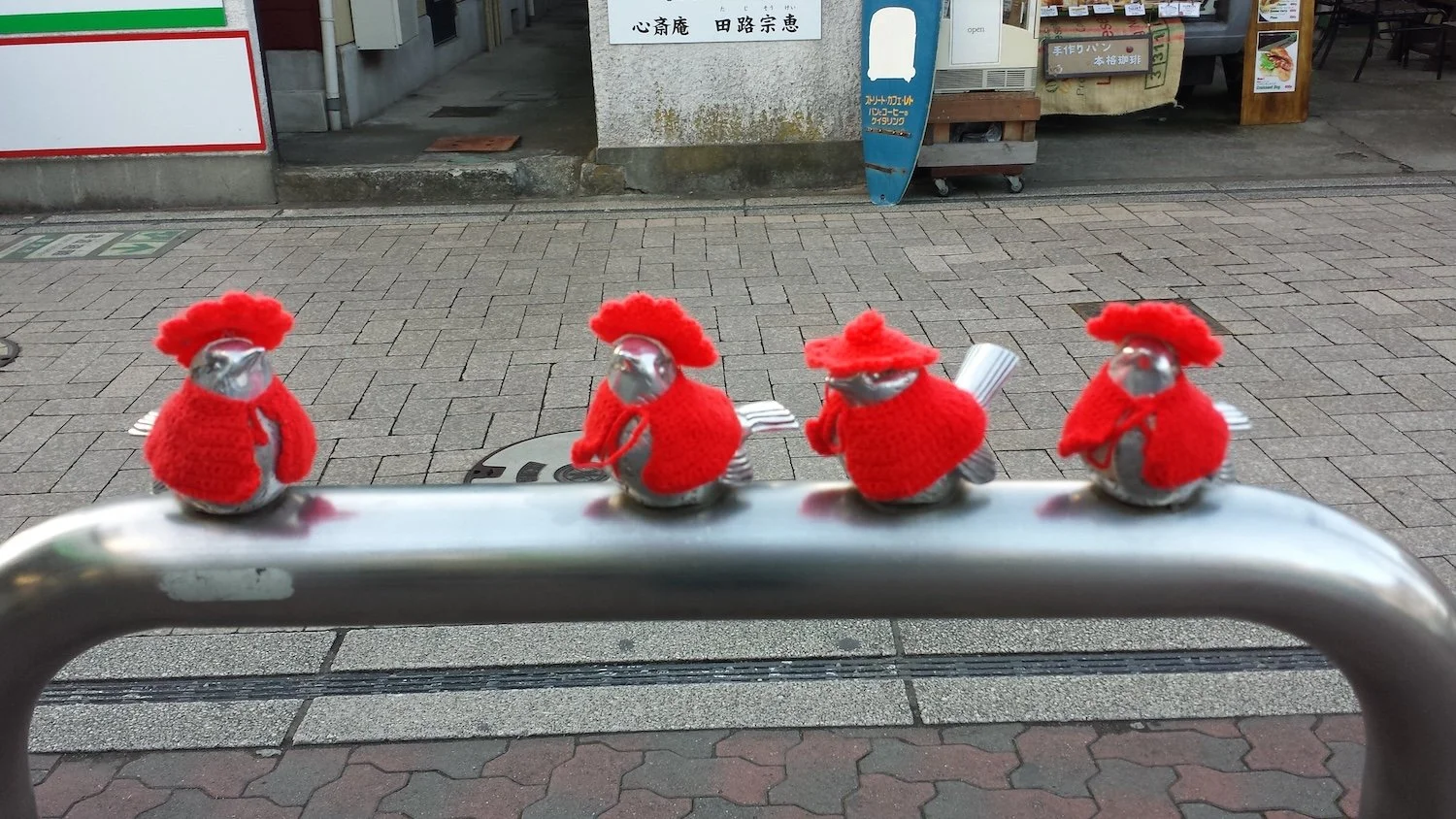
These little sculptures are a familiar sight outside of Enoshima Station along the Enoden route. But what makes them truly special is the care someone takes to dress them for the season. In winter, they sport cozy red hats and capes, like miniature guardians against the cold.
In summer, you might find lighter colors or even floral patterns. It’s a quiet act of creativity that transforms something ordinary into something whimsical.
A Tradition with Roots?
The choice of red isn’t random. In Japan, red is a protective color, often associated with warding off evil and inviting good fortune. It always reminded me of the Jizō statues you see throughout Japan, those gentle stone figures wearing red bibs or knitted caps. Jizō is the protector of travelers and children, and dressing these statues is a way to show care and devotion. Could these little birds be a playful nod to that tradition? A modern echo of an ancient custom? I like to think so.
Living close by in Kita-Kamakura and frequently using the Enoden line to ride along the coast, I passed these birds in every season. Sometimes they wore raincoats, sometimes Santa hats. Each time, they made me pause and smile. It’s these small, human touches that make Kamakura and indeed the rest of Japan feel alive, not just a fun destination, but a place where people still weave warmth into the everyday.
So next time you ride the Enoden line, keep your eyes open. The big sights, the Great Buddha, Hase-dera, are wonderful, but the magic often hides in the details: a splash of red on a silver bird, a handmade gesture that says, “Welcome.”
