

A couple of weeks ago, I wrote about how I relax with detective novels.
Most people probably don't hear "murder mystery" and think "self-care," but I've long since accepted that my brain is wired a little differently. Give me a quiet afternoon, a cup of tea, and a fictional homicide to solve, and I'm perfectly happy.
After recently enjoying Tokyo Express by Seichō Matsumoto, I decided to stay with Japanese detective fiction and listen to Malice by Keigo Higashino.
I thought I knew what I was getting into.
I was wrong.
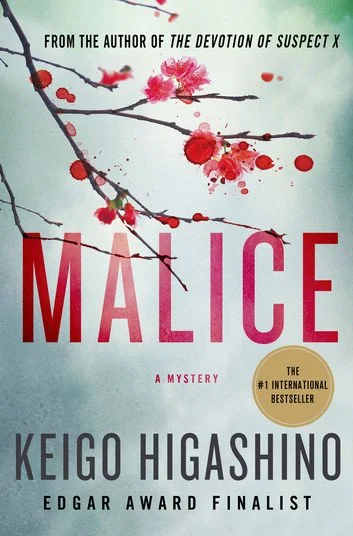
I've read a lot of detective novels over the years. British detectives. Scandinavian detectives. American detectives. Detectives with drinking problems, family problems, and an uncanny ability to solve murders while ignoring both.
After a while, you start to recognize the patterns. You spot the red herrings. You make your predictions. Sometimes you're right.
Malice kept putting me on the back foot.
Every time I felt I was getting comfortable, the story shifted. Not because it relied on outlandish twists or information that had been hidden from the reader, but because it kept challenging the assumptions I was making.
I found myself repeatedly thinking, "Ah, I know where this is going." I rarely did.
What fascinates me about Japanese detective fiction is that it often feels as though it's operating according to a different set of rules. It's not that Western mysteries are predictable and Japanese ones aren't. Rather, the logic underneath them often feels different.
The original Japanese title is Akui (悪意), which literally translates as “ill intent” Looking back, that feels significant. The book isn't really asking the reader to focus on the mechanics of the crime. It's asking us to think about resentment, motivation, and the stories people tell themselves about other people.
One of the things I've learned over the years is that understanding what's happening and understanding why it's happening are not always the same thing. People can look at the same set of facts and interpret them very differently. Malice felt like a masterclass in that idea.
The mystery wasn't simply about solving a crime. It was about understanding people. And, more importantly, understanding how easy it is to misunderstand people. That's probably why I enjoyed it so much.
A good detective novel gives my brain something to focus on other than work, emails, news headlines, and whatever else happens to be floating around. But the best ones also leave me reflecting on something bigger after I've finished them.
So my Mindful Monday thought this week is a simple one: be careful about assuming you know the whole story.
Whether it's a mystery novel, a problem at work, or a conversation with another person, we're often working with less information than we think. And sometimes the most interesting moment comes when we realize we've been asking the wrong question all along.
That's certainly what Malice reminded me.
And it's why I'm still being surprised by Japanese detective writers, even after all these years.
