

Life Stories from Japan: Bringing Japanese-American history to life through the lives that shaped it
One of my favorite things about living between cultures is that there is always another story waiting to be discovered.
A little while ago, I had the pleasure of meeting Simon Partner, a history professor at Duke University, at an event in San Francisco's Japantown. Simon was visiting the Bay Area for the summer, researching the rich history of Japanese-Americans in San Francisco. What started as a casual conversation quickly turned into one of those encounters that reminds me why I love connecting with people who are curious about the world.
Mindfulness is often associated with slowing down and being present. For me, it's also about noticing the stories, people, and histories that shape the communities around us. That is exactly what I found in Simon's Substack, Life Stories from Japan.
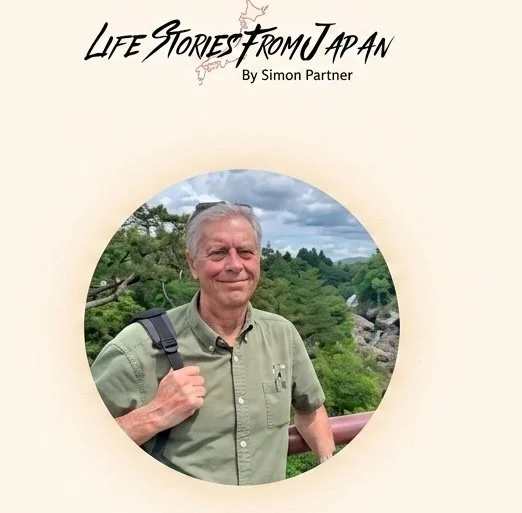
What I appreciate most is the way Simon brings history to life through individual human stories. Rather than presenting history as a sequence of dates and events, he introduces readers to remarkable people whose lives illuminate larger historical movements and cultural experiences.
I was immediately drawn to his story about a Japanese woman who arrived in America through an arranged marriage and then boldly pursued her own path in a tale he calls The Runaway Wife.
Another captivating piece follows Nagasawa Kanae, a Satsuma samurai who was secretly sent abroad as a teenager, traveled from England to New York, and eventually became one of California's most successful winemakers.
Closer to home, Simon explores the history of San Francisco's Japantown through stories like the Pine Street Japanese church, which became a vital support network for newly arrived immigrants, offering everything from language instruction and job placement to shelter for vulnerable women and children. Through stories like these, history becomes deeply personal, relatable, and surprisingly relevant to our lives today.
Reading these stories reminded me how powerful personal narratives can be. They help us move beyond stereotypes, beyond headlines, and beyond assumptions. They invite us to see history through the eyes of people navigating uncertainty, identity, ambition, love, courage, and belonging.
In many ways, that is a mindfulness practice.
When we pause to listen to someone's story, whether it happened last week or a hundred years ago, we expand our understanding. We become a little more connected, a little more compassionate, and a little more aware of the countless threads that tie our lives together.
Having spent a good chunk of my adult life living and working in Japan, I'm always looking for resources that make Japanese history and culture accessible, engaging, and human. Simon's writing does exactly that. His stories are meticulously researched, yet they read like conversations. They are informative without feeling academic, and they make history feel wonderfully human.
Meeting Simon in Japantown was a wonderful reminder that mindfulness isn't only about looking inward. It's also about remaining open to the people, stories, and connections around us. Sometimes a chance conversation introduces us to an entirely new way of seeing the world.
If you're curious about Japan, Japanese American history, immigration stories, or simply enjoy beautifully told stories about real people, I encourage you to explore Simon's Substack, Life Stories from Japan.
