

Japanese winter traditions: Chawanmushi
When winter settles in and the air turns crisp, Japan’s kitchens come alive with comforting dishes that warm both body and soul. Among these treasures is chawanmushi, a delicate savory custard that feels like a quiet embrace in a porcelain cup.
The name itself is beautifully simple: chawan means tea bowl, and mushi means steamed. Put together, it literally means “steamed in a tea bowl.” This humble description hides the elegance of the dish, a silky egg custard infused with dashi, soy sauce, and mirin, often cradling surprises like shrimp, chicken, shiitake mushrooms, and a bright yellow ginkgo nut.
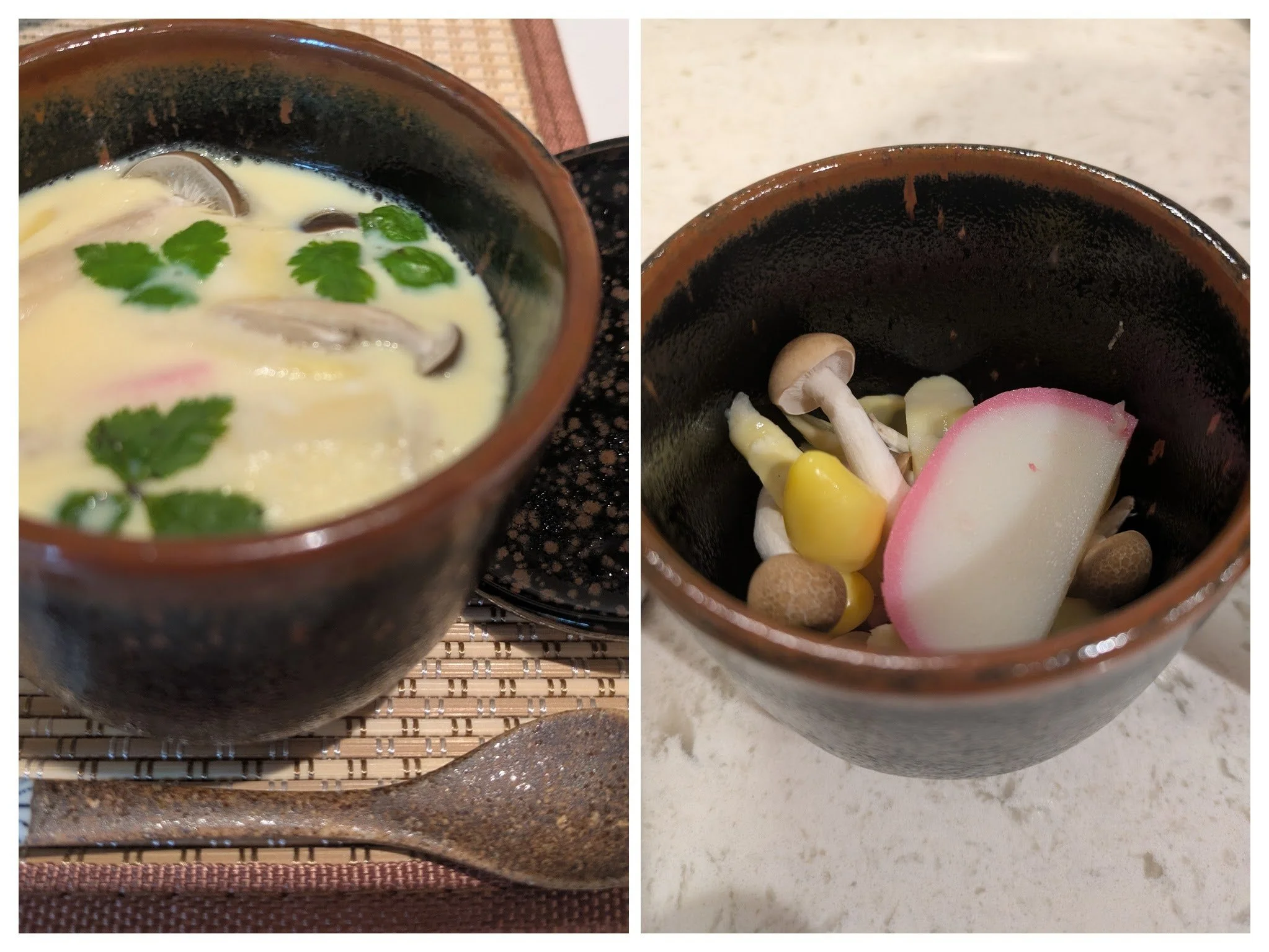
Chawanmushi is believed to have originated during the Edo period, influenced by Chinese and Western custard techniques but adapted to Japanese tastes. Unlike sweet custards, this one is savory, showcasing the subtle harmony of umami flavors. Traditionally served as part of a kaiseki meal, it’s now a beloved comfort food, especially in winter when steaming feels like a ritual of warmth.
I first learned to make chawanmushi in Komatsu in 1997, thanks to a dear friend who patiently showed me how to whisk eggs gently and strain the mixture for that perfect smoothness. We’re still friends today, and every time I make chawanmushi, I think of that afternoon, two people in a small kitchen, sharing stories while waiting for the steam to work its quiet magic.
Making chawanmushi is surprisingly easy and fun, especially this time because I used my Instant Pot for the steaming for the first time. It felt almost effortless compared to the traditional stovetop method, and the result was perfectly smooth and tender. For the filling, I chose pieces of chicken, kamaboko (a type of Japanese fish cake with a pink swirl that adds both color and a gentle sweetness) along with ginkgo nuts, shimeji mushrooms. Put all these in a lovely cup and pour the egg mixture on top. Then, sprinkle some fresh mitsuba on top for a bright, herbal finish. My husband loved it, which made the whole experience even more rewarding.
Chawanmushi is best enjoyed warm, spooned slowly from its cup. It’s not a dish for haste, it asks you to pause, taste, and connect. Whether you’re alone at your kotatsu or sharing with loved ones, each bite is a reminder that care and attention create comfort.
If you’d like to try making chawanmushi yourself, I recommend visiting JustOneCookbook. It’s my go-to source for inspiration and clear, step-by-step recipes. I love how they offer easy substitutions when traditional ingredients are hard to find outside Japan, so you can enjoy the essence of the dish wherever you are.
