

When tradition meets synchrodestiny: Lessons from an Inami Woodcarving Master
Last Friday, I had the privilege of attending a Japan Society event featuring master carver Nambu Hakuun III, a living link to the centuries-old tradition of Inami woodcarving. Watching him work was like stepping into a dialogue between past and present.
When I lived in neighboring Ishikawa, I visited Toyama, though not Inami town itself, and remember being struck by its deep sense of history. Toyama Prefecture is known for its rich cultural heritage, from traditional crafts to breathtaking landscapes framed by the Tateyama mountain range. Still, I’m amazed at how much more there is to learn about Japanese craftsmanship. These artisans carry generations of skill, yet remain so humble and eager to share their craft. There’s no sense of ego, only quiet pride in preserving something beautiful for the next generation.
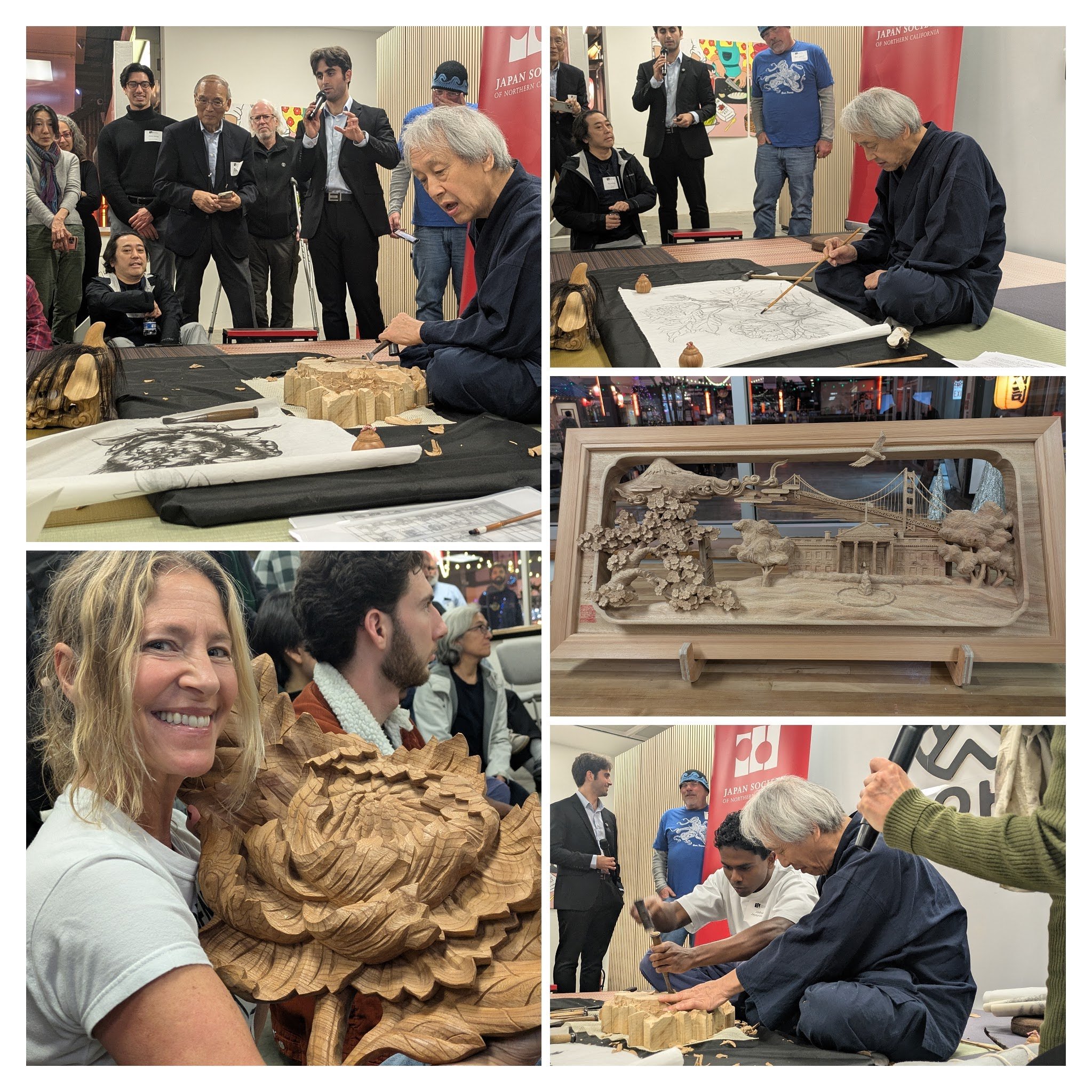
Inami woodcarving, which originated in the Edo period, is famous for its intricate designs adorning temples and shrines. It’s a craft that demands patience, precision, and a deep respect for natural materials.
Hakuun-sensei demonstrated the process: first painting the design, then carving it into camphor wood. As the woodchips flew, the air filled with that incredible camphor scent, sharp, clean, almost meditative. A few participants even tried their hand at carving, guided by his patient instruction. Watching him teach reminded me that true mastery is inseparable from humility. The more skilled someone becomes, the more they understand the value of sharing and listening.
What struck me most was learning that Hakuun-sensei is the only master to continue the old tradition of hosting apprentices in his own home for five years. During that time, they become family. There are no formal lessons, apprentices learn by watching and doing, starting with the simplest task: sharpening chisels. It’s a slow, deliberate process that mirrors life itself. You don’t rush; you observe, absorb, and practice until the craft becomes part of you. That kind of learning is mindfulness in its purest form.
And then he shared something deeply personal: he originally wanted to become a sailor. That dream didn’t happen, he was rejected, and so he chose to continue the tradition of his grandfather and father. Listening to him, I couldn’t help but think about synchrodestiny, those moments when the universe closes one door and quietly opens another. At the time, it may feel like a setback, but years later, we see how the path we didn’t plan becomes the one that fits us best. For Hakuun-sensei, that path led to a life of artistry, patience, and legacy.
This ancient art adapts to modern culture too. Among the traditional motifs was a piece depicting the Golden Gate Bridge and the White House, a bridge between worlds, quite literally. It’s proof that tradition isn’t static; it breathes, evolves, and welcomes new stories.
For me, this experience was a meditation on humility and presence. Every stroke of the brush, every chip of wood, was a lesson in slowing down and appreciating the quiet resilience of tradition in a fast-moving world. And maybe, just maybe, a reminder to trust the paths that unfold, even when they aren’t the ones we imagined.
