

Recently, I was passing through Tokyo Station when I noticed a small workstation booth tucked into a corner of the station.
I've seen these before. They're private booths that can be reserved for calls, meetings, or just getting some work done while you're in transit. This particular one was sitting underground among commuters rushing to trains, people meeting colleagues, and travelers dragging suitcases through the station.
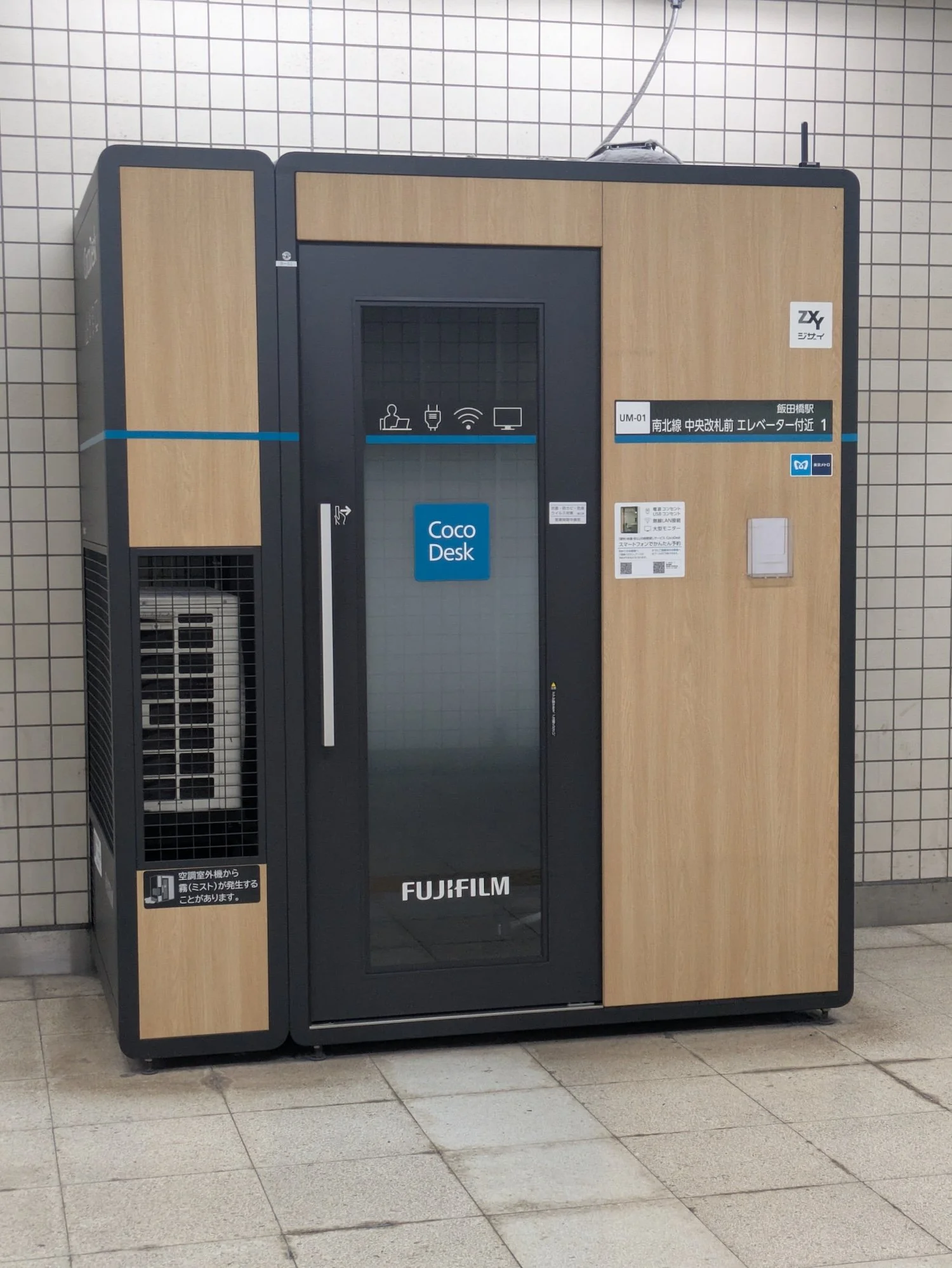
Seeing it reminded me of another post I wrote a few weeks ago about something completely different: a cool down box, essentially a small air-conditioned room designed to help workers cool off during Japan's increasingly hot summers.
At first glance, the two things have nothing in common.
One is designed for people who are working outdoors in extreme heat. The other is designed for people who need a quiet place to work while traveling.
But the more I thought about it, the more I realized they're actually solving the same kind of problem.
One of the things that has always fascinated me about Japan is the attention paid to small points of friction in daily life. Someone noticed that workers needed a way to recover from dangerous heat. Someone else noticed that people moving through train stations sometimes needed a private place to take a call or answer emails.
Neither solution is particularly glamorous. Neither is likely to make international headlines, yet both make life a little easier. The workstation booth also got me thinking about the relationship between work and transportation.
In the United States, particularly in California, transportation and work often feel like completely separate activities. Most people drive. If you're on your way to a meeting, you're probably sitting in traffic. You may be listening to a podcast or taking a hands-free call, but you're generally not reviewing a proposal, responding to emails, or preparing a presentation.
In Japan, it can be different.
Because so many people rely on trains, transportation time is often more flexible. People read, study, answer emails, review documents, and prepare for meetings while they're moving from one place to another. If you're taking the Shinkansen between cities, it's not unusual to see people working for much of the journey.
A workstation booth in a train station feels like a natural extension of that reality. If you arrive early for a train, have a gap between meetings, or need a quiet place for a Teams call, the infrastructure is already there.
What interests me isn't the technology itself. The booth is just a desk, a chair, power outlets, and a door. What interests me is the assumption behind it.
Someone thought about the experience of moving through a train station and recognized that people might need more than trains, shops, and restaurants. They might need a place to take a call.
Just as someone looked at summer temperatures and recognized that workers might need a place to cool down.
After nearly 30 years of living and working with Japanese companies, I've become convinced that some of the most interesting things about Japan are not the big innovations that attract global attention. They're the small, practical solutions that emerge when people pay close attention to how others actually spend their day.
Neither the workstation booth nor the cool down box is particularly exciting on its own, but both tell us something about how problems are identified and solved.
And sometimes that's far more interesting than the solution itself.
Want to learn more about Japanese business practices and how to succeed in global environments?
Join one of JCO’s programs and gain practical insights into Japan’s unique business culture, communication styles, and strategies for collaboration. Together, we can create more opportunities for global success.
If you want to learn more about bridging language and cultural gaps in Japanese business, why not join one of our sessions! Here’s the link to upcoming sessions (make sure to select your timezone)
