
Mascot Mania: Why Japan loves characters for everything!
Today I wanted to write about one of my favorite quirks of Japanese culture: mascots, or as they’re called in Japan, yuru-chara (literally “loose characters”). These adorable figures aren’t just for kids, they’re everywhere, and they’re serious business!
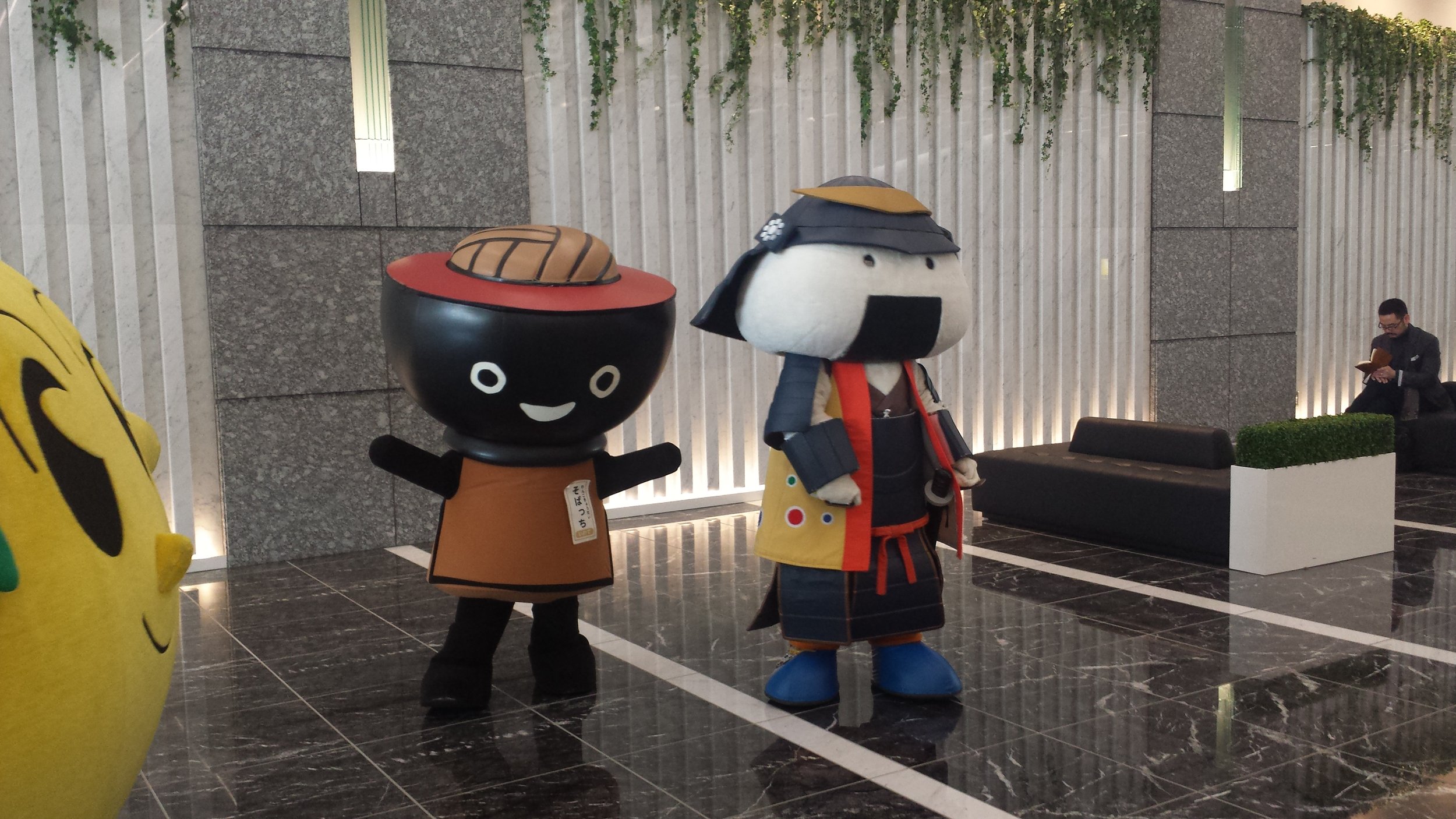
Take a look at today’s photo I took at work in Tokyo years ago:
A black mascot shaped like a bowl of noodles, complete with a wooden lid hat, because food deserves personality too!
And my favorite, an onigiri (rice ball) dressed as a samurai warrior. Yes, in Japan, even rice balls can be heroic!
What’s amazing is how these mascots are used for everything:
✅ Cities create them to promote tourism.
✅ Companies use them for branding and events.
✅ Government agencies have their own cuddly ambassadors for public campaigns.
And then there are the truly unforgettable ones, like the Osaka World Expo 2025 mascot, which sparked global buzz for its… let’s say unique design.
With its colorful rings and quirky, almost surreal look, it was a reminder that Japan doesn’t just do cute, it does bold, weird, and memorable. Love it or hate it, you couldn’t ignore it, and that’s exactly the point of a mascot: to make an impression that lasts.
But Japan’s love for characters doesn’t stop at mascots, you’ll even find it in lunchboxes! Enter chara-ben (character bento), where parents and food artists turn everyday meals into adorable works of art featuring popular mascots, anime characters, and seasonal themes. Imagine opening your lunch to find rice shaped like Kumamon or Pikachu, it’s creativity and cuteness rolled into one delicious package. It’s another example of how Japan infuses fun and personality into the ordinary.
Why does it work? Because mascots and character culture make life more approachable and joyful. Instead of a boring flyer or plain lunch, you get something that makes you smile, and maybe even share a photo.
So next time you’re in Japan, keep your eyes open. You might bump into an oversized sushi roll giving high-fives or a train station mascot waving you onto the platform. In Japan, mascots aren’t just decoration, they’re part of the experience!
