

Ōmisoka: New Year’s Eve in Japan
As I’m posting this a few days into the new year, I’m wondering how you spent Your New Year’s Eve. Did you keep any traditions or create new ones? My New Year’s Eve definitely changed from when I was growing up, I went from a solid Flemish “Oudejaarsavond” to a Japanese influenced Ōmisoka.
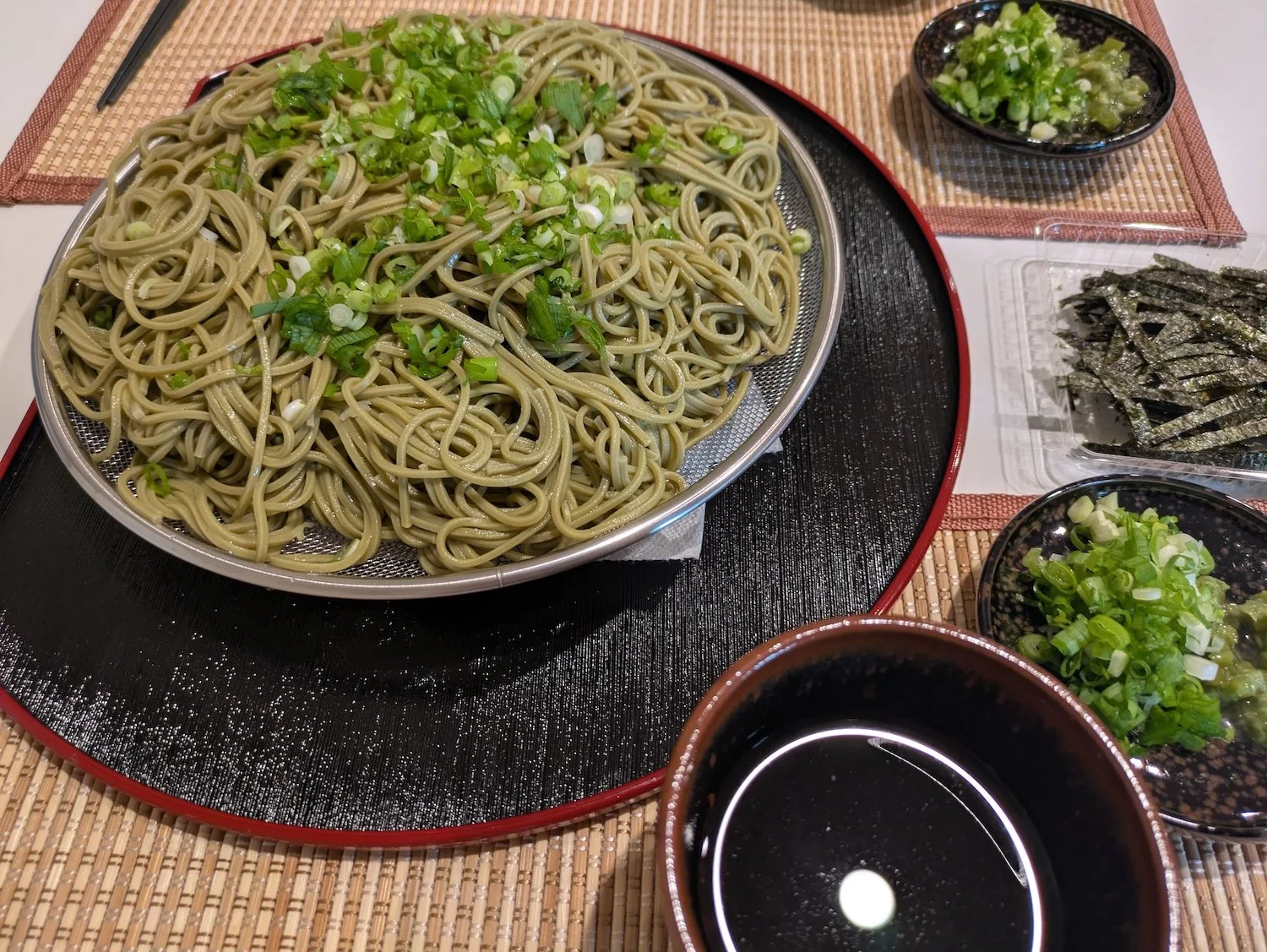
Back home, the evening always started with bread, cheese, and wine, a cozy Flemish tradition that feels like the perfect way to close the year. These days, though, my celebrations have taken on a Japanese flavor. After that familiar start, we switch to Ōmisoka customs, and the centerpiece is Toshikoshi soba, the “year-crossing noodles.”
Ōmisoka is all about clearing away the old and welcoming the new. Traditionally, families clean their homes from top to bottom in a ritual called Ōsōji, and Buddhist temples ring their bells 108 times at midnight in Joya no Kane, symbolically cleansing worldly desires.
Eating soba on New Year’s Eve is a custom that dates back centuries. The long, thin noodles represent longevity and resilience, while their easy-to-cut texture symbolizes letting go of hardships from the past year.
One of my fondest memories of Ōmisoka is standing at Sensōji in Asakusa with friends, listening to the deep, resonant sound of the 108 bells ringing out into the cold night. It was so much more impactful than the loud discos I went to when I was young: quiet, spiritual, and full of meaning. That experience changed how I think about New Year’s Eve forever.
Of course, traditions evolve. Many Japanese families now order osechi ryōri instead of making it at home, and younger generations often choose countdown parties over quiet reflection. Even NHK’s famous Kōhaku Uta Gassen (their annual New Year’s Eve music show), once a staple of the night, now competes with streaming services and social media.
Despite these changes, one tradition I hope never disappears is Toshikoshi soba. For me, this is the heart of Ōmisoka. I love watching my husband prepare the noodles, carefully boiling them and arranging them in simple bowls. It’s such a comforting ritual, no fanfare, no rush, just the two of us sharing something warm and humble as the year slips away. And honestly, it’s really easy to make! A simple broth, some soba noodles, and a few toppings like green onions or tempura if you want to make it special. It’s proof that meaningful traditions don’t have to be complicated.
If you want to try it yourself (no need to wait another year - you can eat this anytime!), here’s a recipe at my favorite cooking blog JustOneCookBook!
