

The human refrigerator has arrived
One of the things I love about Japan is that whenever the rest of the world identifies a problem, Japan's response is often, "Let's engineer something strangely specific to solve it."
Recently, I learned about a new invention called the "human refrigerator."
And yes, it's exactly what it sounds like.
Developed by a Japanese company that makes refrigeration equipment and vending machines, it's essentially a small booth that looks like a giant vending machine. You step inside, sit down, and cold air blasts your head, neck, shoulders, and back.
As someone who spent many summers in Japan, I immediately thought: honestly, this might be the most rational thing I've heard all week.
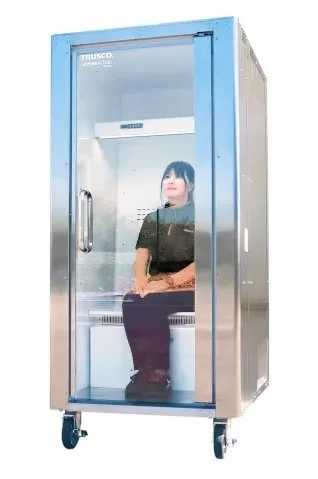
Image Copyright Trusco.co.jp
As someone who spent many summers in Japan, I immediately thought: honestly, this might be the most rational thing I've heard all week.
If you've never experienced a Japanese summer, imagine walking outside and feeling as though you've accidentally entered a sauna while fully clothed. Then add a business suit.
The impressive thing is that this wasn't designed as a gimmick. It's intended for people working in construction, factories, warehouses, outdoor events, and other environments where heat exhaustion is a genuine concern. The booth keeps a cool interior temperature, can lower body temperature quickly, and even shuts itself off after a set period so users don't overdo it.
The whole concept was reportedly inspired by Japan's refrigerated vending machines, which somehow makes the story even more Japanese.
What I find fascinating is that this invention says a lot about how Japan approaches problems.
Many countries respond to extreme summer temperatures by telling people to drink more water, seek shade, and be careful. Japan looked at the same problem and said, "What if we built a refrigerator large enough for one person and put wheels on it?" Problem solved.
It also reflects something I've noticed over the years. Japan is incredibly good at creating practical solutions for everyday inconveniences. Sometimes those solutions seem odd at first. Then six months later you find yourself thinking, "Actually, that's brilliant."
I had the same reaction the first time I saw cooling neck rings, portable fans worn around the neck, air-conditioned work jackets, and heated toilet seats.
At some point you stop laughing and start wondering why the rest of the world hasn't copied the idea yet.
The human refrigerator costs roughly 1.5 million yen, which puts it well outside my impulse-buy budget. But if Japanese summers keep getting hotter, I could easily imagine a future where every construction site, warehouse, and factory has one.
And knowing Japan, someone is probably already working on a version that dispenses cold canned coffee while you're cooling down.
