

Today’s treat is yokan 羊羹, a classic Japanese confection that’s as elegant as it is satisfying. This smooth, sweet block of red bean paste has been around for centuries, originally introduced from China and perfected in Japan during the Edo period. Traditionally made with azuki beans, sugar, and agar, yokan became a staple in tea ceremonies because of its refined simplicity and long shelf life, perfect for pairing with a warm cup of tea.
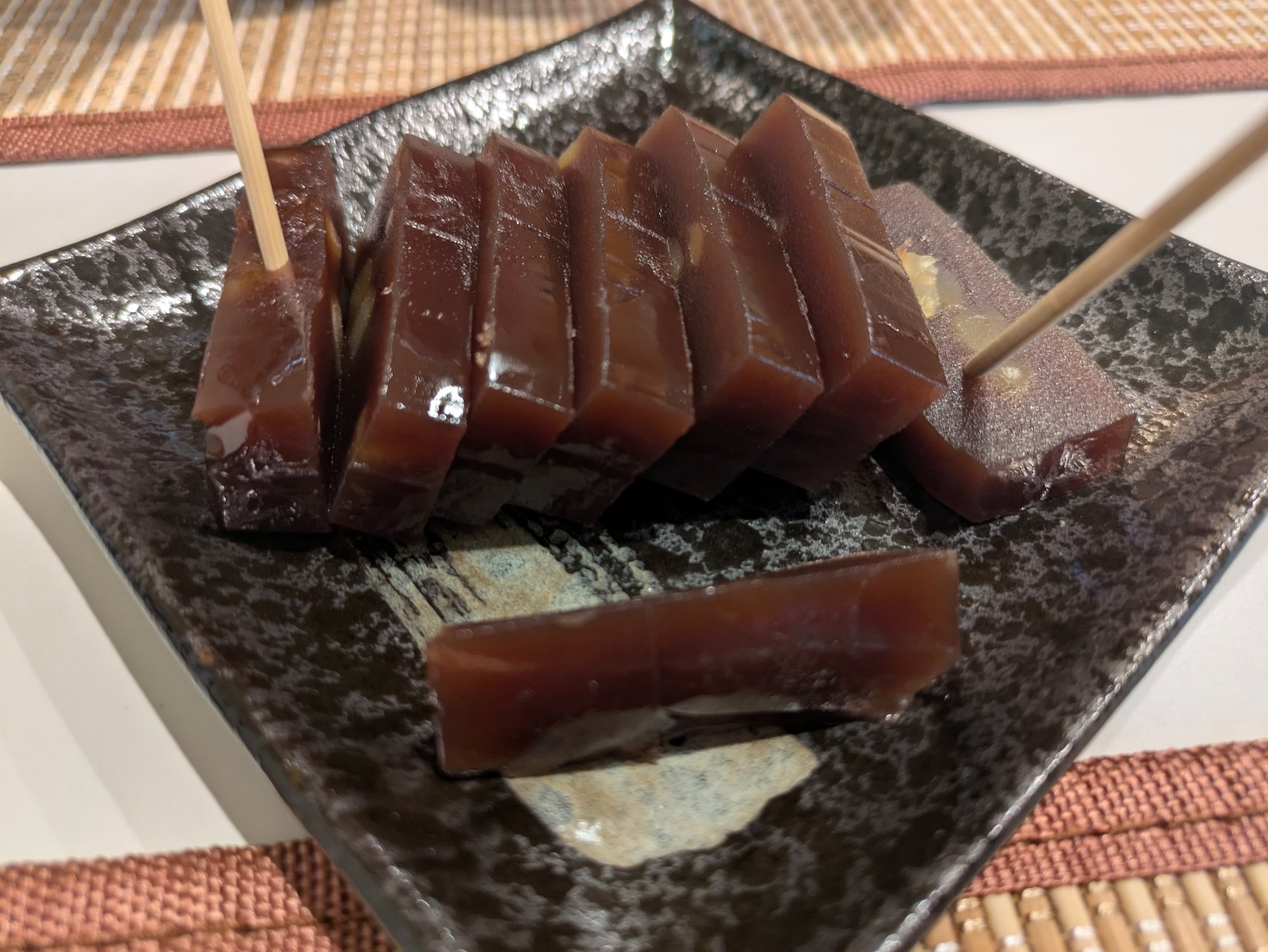
Whenever we enjoy yokan, we’re reminded of my husband’s beloved auntie, our dear obasan, who used to send us piles of high-quality yokan. It was her way of sharing love across the miles, and every bite still carries that memory. Obasan has since passed on, yet her presence still feels near, in the small rituals that connect us to home.
At our local Japanese supermarket, we can buy yokan: smooth, sweet, and rich with tradition. How wonderful it is that these treasures, once tied to a single place, now travel across oceans, letting us savor a taste of Japan wherever we are.
There are two main styles of yokan: smooth yokan and yokan with bits inside. I usually prefer the smooth type, but I was happily surprised by the kuri (chestnut) yokan in the photo: it adds a cozy autumn flavor that feels like a seasonal hug.
Even better, this kuri yokan came wrapped in a sasa leaf, which made it extra festive. For those unfamiliar, sasa refers to bamboo leaves, traditionally used in Japan to wrap sweets and rice cakes. This time, the wrapping was mostly for looks, but in the past, sasa leaves served a practical purpose: helping preserve freshness and adding a subtle earthy aroma, while evoking the beauty of nature. It’s a lovely reminder of how presentation and meaning go hand in hand in Japanese sweets.
I wrote about kuri a few weeks ago, and this is yet another example of how Japanese foods reflect the season so beautifully. Beyond chestnut, there are many other variations too, like green tea, sweet potato, and even black sesame, each offering its own unique twist on tradition. These days, we savor yokan as an afternoon snack with a cup of hojicha.
And here’s a tip: yokan makes a fantastic hiking snack! It’s packed with energy, easy to carry, and free from weird additives. Just pure, wholesome sweetness to keep you going on the trail.
So whether you’re at home with tea or out exploring nature, yokan is a little piece of tradition that fits perfectly into modern life.
